eHow launches Android app: Get the best of eHow on the go.

How To

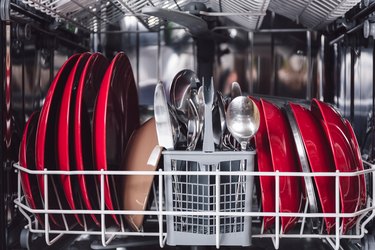
How to Load and Run a Dishwasher

Contributor
By eHow Contributing Writer
(40 Ratings)

It seems like an easy task, but do you know the proper way to load and run your dishwasher?

From Quick Guide: Dishwashers 101
Difficulty: Easy
Instructions

Things You'll Need:

  • Dishwasher Rinse Agents
  • Dishwashing Detergent
  • Dishwashers
  • Heavy-duty Scouring Pad
  • Rubber Spatulas
  • Rubber spatulas
  1. Step 1

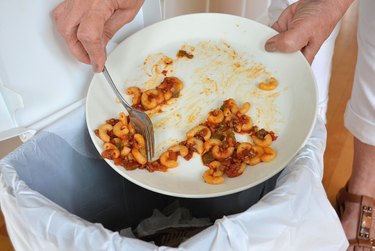
    Scrape off big chunks of food before you put dishes in the dishwasher, but don't worry about rinsing them off. Most washers are designed to handle food particles. (Don't expect the dishwasher to remove burnt-on foods, though.)

  2. Step 2

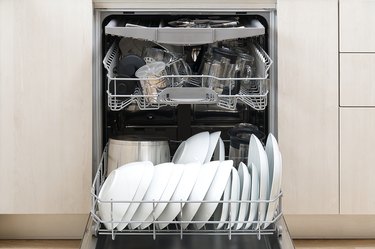
    Position cookie sheets and large platters along the sides so they don't prevent the water from reaching the other dishes.

  3. Step 3

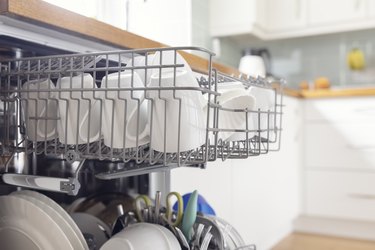
    Reserve the top rack for plastic items, glasses and mugs. (Make sure that plastic items are dishwasher-safe.) Set plates and bowls in the bottom rack.

  4. Step 4

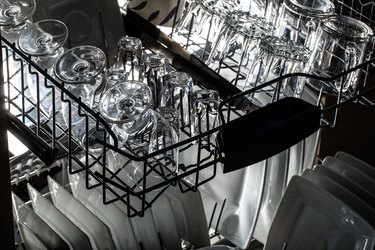
    Be sure that glassware is put on the prongs. Loose glasses might break and make a dangerous mess.

  5. Step 5

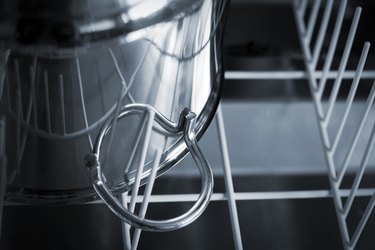
    Put pots and dishes with baked-on food in the bottom rack facing down toward the sprayer arm.

  6. Step 6

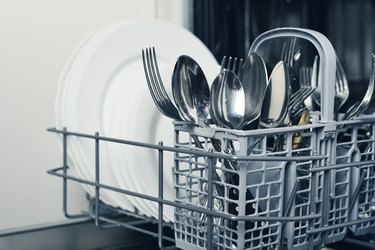
    Set silverware handles down, except for knives, which should be handles up in the silverware basket.

  7. Step 7

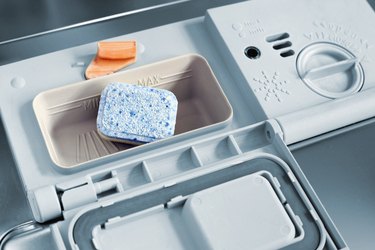
    Fill both dishwasher cups with dishwasher detergent.

  8. Step 8

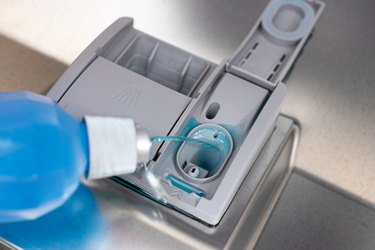
    Add rinse agent to rinse agent dispenser; replace top of dispenser.

  9. Step 9

    Close door securely.

  10. Step 10

    Choose a wash cycle appropriate to the load.

  11. Step 11

    Choose a dry cycle. Air drying saves energy, but may cause spotting.

  12. Step 12

    Start dishwasher.

Tips & Warnings
  • Make sure that pot handles, knives and other items don't poke down to obstruct the sprayer arm.
  • Never wash fragile items on the bottom rack.
  • Always separate silver from stainless steel utensils. Most silver manufacturers recommend that you not wash silver in a dishwasher.
  • The water temperature in your dishwasher should be at least 130 degrees F.
  • A dishwasher runs more efficiently if you wait until you have a full load to run a cycle.
  • Keep dishwasher detergent and rinse agent out of the reach of children.
  • Not all items are dishwasher-safe. If you are not sure, look for instructions printed on the item, or read instruction pamphlets or tags.
  • Don't use regular dish soap in your dishwasher, or you'll be cleaning up suds from your kitchen floor.

Comments  

| View All 21 Comments

jeans077 said

Flag This Comment

on 2/28/2009 well that means its a house free from worries..

MistyP said

Flag This Comment

on 4/3/2008 I have done all these Recomended thing and I am still ending up with dirty dishes.(my dishwasher is brand new) Any suggetions

MistyP said

Flag This Comment

on 4/3/2008 I have done all these steps that have been recomended, I still end up with dirty dishes.( My dishwaser is Brand New). Anyone know what I am doing wrong?

naimas said

Flag This Comment

on 3/18/2008 IMPORTANT! The correct way to load a dishwasher depends on how many washer arms your washer has.

1) Open your dishwasher

2) See how many washer arms it has.

If it has two or more than the correct way of putting pots on bottom is correct.

If it only has one washer arm then the traditional (correct) way is WRONG and your dishwasher won't clean effectively.

A one arm wash shoots water from the bottom all the way to the top of the dishwasher. If you have pots on the bottom then the water will not make it to the top to wash effectively. By putting pots on the top (open side facing down) and the dishes and glasses on the bottom you will clean the dishes better because water and cleaner easily spray past the dishes up to the pots.

This is only if you have a single arm wash unit. Single arm wash units need to go opposite of the traditional way to load dishes.

naimas said

Flag This Comment

on 3/18/2008 The load order (pots on bottom) is only correct if you have a dishwasher with a wash arm on top as well as on the bottom. THIS IS IMPORTANT. If you only have a bottom arm that shoots water then you will need to have the pots on top or else they will block the water from getting up to the dishes.

Post a Comment

Post a Comment
  • Have you done this? Click here to let us know.
I Did This

Related Ads

Home & Garden
Ruby Bayan,

Meet Ruby Bayan eHow's Home & Garden Expert.

Get Free Home & Garden Newsletters

Copyright © 1999-2009 eHow, Inc. Use of this web site constitutes acceptance of the eHow Terms of Use and Privacy Policy.   en-US Portions of this page are modifications based on work created and shared by Google and used according to terms described in the Creative Commons 3.0 Attribution License.

eHow Home and Garden
eHow_eHow Home and Garden