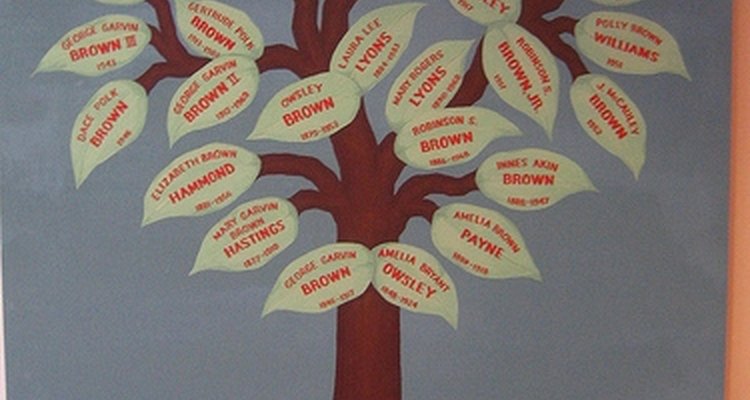
Understanding the proper terms for family relationships, such as second cousins or cousins twice removed, may sound confusing. However, the rules for each relationship term are actually simple.
Common Ancestor
The first relationship in the chain is the first couple, or common ancestor, in a line of relatives. The children of that couple are siblings (brothers and sisters). These rules apply for half-siblings also who share only one common ancestor.
Grandchildren
The children of two siblings are first cousins. In other words, Genealogy.com says that children who are not siblings, but have at least one common grandparent, are first cousins. To put it another way, your aunt's or uncle's children are your first cousins.
Great-grand children
The children of first cousins are second cousins. Ancestry.com points out that this means second cousins have a common great-grand parent.
Continued
Each next step down with children in the same generation creates the next level from third to fourth cousins and more. Therefore, fifth cousins had a common ancestor five generations back.
Removed
The slightly complicated part is the cousins "removed" which occurs when relatives are not from the same generation. In simple terms, Genealogy.com explains that the child of your first cousin is your first cousin once removed. That person's child is your first cousin twice removed. The child of your second cousin is your second cousin twice removed and so forth.
Related Articles

The Difference Between First and Second ...

How to Create a Family Tree That ...

Do the Groom's Parents or Bride's ...

How to Do a Genogram

What Is a First-Degree Relative?

Positive and Negative Aspects of ...

How to Tie a Baptism Bonnet
What Are the Family Ties for the Greek ...

How to Make Breaded Shrimp With Corn ...

What Are Direct Descendants?

Jealousy in Adult Siblings

How to Draw a Family Tree When There Is ...
What Is a Family Crest?

How Adult Children React to a Parent's ...

Thank You Note Etiquette for Envelopes
How to Deal with Your Husband's Out of ...
How to Make a Family Tree With Ex ...

What Are the Genogram Symbols?

Signs & Symptoms of a Jealous Sister

How to Stop Fighting Among Older Adult ...
References
Resources
Writer Bio
Daniel Cobalt lives in Georgia and has been writing online for over five years. He has a technical certificate in printing from the Philadelphia Printing School. His areas of expertise include fitness, home schooling, parenting, personal relationships, small business ownership and pet topics including breeding, training and responsible ownership.
Photo Credits
Image by Flickr.com, courtesy of Rick Audet