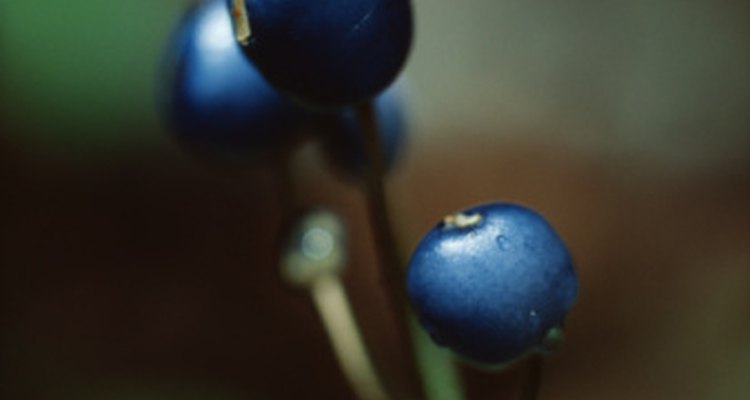
Drying blueberries in a food dehydrator has several benefits. The blueberries can be purchased in-season, when they are at their lowest yearly cost, dried and stored for later use. The preservation qualities that accompany removing the moisture from the berries allow for up to six months of storage when kept in a cool, dry place. When ready for use, simply rehydrate the dried blueberries in cold water – 1/2 cup for every cup of dried fruit – and use as you would fresh.
Sort through the blueberries and discard any with mold, blemishes or bruising. Rinse the blueberries and allow them to air dry. Place the blueberries in a nonreactive mixing bowl.
Squeeze the juice from one lemon in the bowl and gently stir to coat. Lemon juice prevents oxidation during the drying process. Use one lemon for every pound of blueberries.
Place the blueberries in a colander and drain any excess lemon juice.
Distribute the blueberries in an even layer on the dehydrator tray. Place the dehydrator tray in the dehydrator and secure the door or cover.
Adjust the dehydrator’s thermostat to 120 degrees Fahrenheit and turn the power on.
Dehydrate the blueberries for a minimum of six hours; check for the desired consistency and continue if needed. Do not dehydrate blueberries for more than 10 hours. Gage the dryness of the blueberries by cutting one in half and checking its internal moisture content. The blueberries should be free of all moisture.
Store dried blueberries in a sealable food storage container or sealable food-storage bag with a folded paper towel placed inside. The paper towel will collect moisture that naturally enters the container during storage.
Related Articles
How to Dry or Preserve Blueberries
How to Freeze Raspberries
Nutrition Information on Blueberries
How Long Can You Freeze Fresh ...
How to Refresh Dried Fruits: Raisins
Fruits & Vegetables Rich in Potassium ...
How to Oven-Dry Figs
How to Make a Healthy Pancake Syrup
How to Keep Macadamia Nuts Fresh
How to Remove a Cardamom Seed From a Pod
How to Blanch Cashews
Is There a Loss of Nutritional Value in ...
How to Dry Pineapple in a Dehydrator
How to Turn Plums Into Prunes

How to Keep Chives Fresh
Goji Vs. Blueberries

How to Thicken Raspberry Jam With ...

How to Make Blueberry Jam
How to Dry Wild Morel Mushrooms
How to Make Goji Berry Tea
References
Writer Bio
A.J. Andrews' work has appeared in Food and Wine, Fricote and "BBC Good Food." He lives in Europe where he bakes with wild yeast, milks goats for cheese and prepares for the Court of Master Sommeliers level II exam. Andrews received formal training at Le Cordon Bleu.
Photo Credits
Photos.com/Photos.com/Getty Images