Things You'll Need
2 clean baby food jars
Cardstock paper
Pencil
Scissors
Small hole punch
Fine sand
Duct or electrical tape
Timer that counts seconds
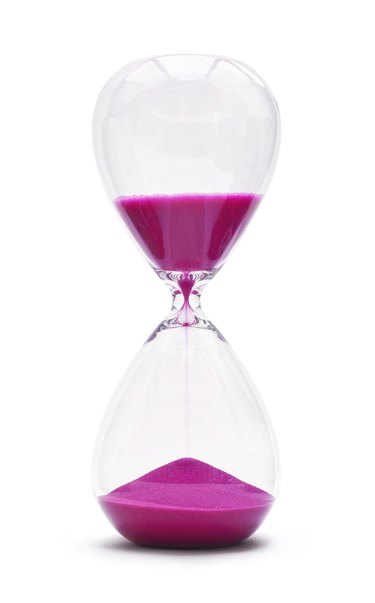
Teach your child how to time things using the ancient method of an hourglass sand timer. These sand glass or sand clocks date back to the third century, according to Education.com. The glasses were also worn on chains so they could be used like a watch. Each hourglass measures the amount of time it takes for the sand to run from one bulb to the other. The amount of time it takes depends on the size of the bulbs, the amount of sand and the size of hole where the sand travels. Make an hourglass and see how much time you can get it to measure.
Step 1
Check the baby food jars for any moisture. They must be free of any water or the sand will stick.
Video of the Day
Step 2
Place a jar upside down on the cardstock. Trace around the mouth of the jar with a pencil. Cut the shape out with scissors.
Step 3
Punch a hole in the center of the circle with the hole punch.
Step 4
Pour sand into one of the baby food jars until it is 3/4 of the way full. Place the circle on the mouth of the jar. Place the second empty jar upside down on top of the first jar. The mouths should be lined up together with the cardstock circle in between.
Step 5
Tape the mouths of the bottles together with a piece of tape.
Step 6
Turn the hourglass over and start your timer. See how long it takes for the sand to empty into the bottom jar. Repeat a minimum of three times to get an accurate idea of how long it takes. If you would like the timer to run longer, peel off the tape and remake the cardstock circle with a smaller hole. If you would like the timer to measure less time, empty some of the sand from the bottom jar. Re-tape the jars and test again.
Tip
Use larger jars or bottles if you want the timer to count more time.
Video of the Day