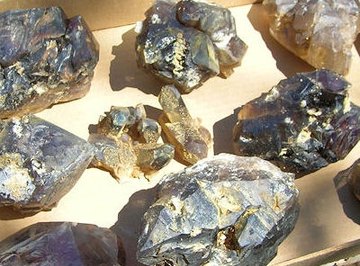
For a true crystal lover, there’s nothing more enjoyable than spending a day searching for--and finding your own--quartz crystals. However, finding the crystals is just the beginning. Most of the time, these lovely gifts from nature will be coated in the dirt and sediment of the locale from which they were found. Once you get the crystals home, you’ll have to take proper care to clean them without doing any damage to their natural beauty. It may take a bit of work, but the joy of seeing the finished, sparkling quartz crystals is definitely worth the effort.
Be gentle with your quartz crystals.
Do not dispose of the dirty water down the drain. The leftover dirt and gravel could potentially clog your plumbing system.
Place the quartz crystals in a plastic container. The container should be large enough so that the crystals only fill it half-way. Plastic buckets and food-storage containers are perfect for this task.
Fill the container the rest of the way with warm soapy water. It is better to use a liquid soap to avoid any potential scratching or chipping of the quartz.
Let the quartz crystals soak in the container overnight. If the crystals have a particularly large amount of dirt and gravel on them, you may wish to let them soak longer.
Retrieve the quartz crystals from the container and rinse them thoroughly. It is best to do this either outside or over a bucket indoors.
Remove the remaining dirt and grime from the quartz crystals using warm, soapy water and a soft-bristled toothbrush. Scrub the crystals carefully with the toothbrush. If there is a lot of dirt remaining on the crystals or if the dirt is still hard to remove, return to Step 1 and repeat the process.
Tips
Warnings
Tips
- Be gentle with your quartz crystals.
Warnings
- Do not dispose of the dirty water down the drain. The leftover dirt and gravel could potentially clog your plumbing system.
About the Author
This article was written by the CareerTrend team, copy edited and fact checked through a multi-point auditing system, in efforts to ensure our readers only receive the best information. To submit your questions or ideas, or to simply learn more about CareerTrend, contact us [here](http://careertrend.com/about-us).
Photo Credits
Michele McDonough