
Running Fastball vs. Cutter
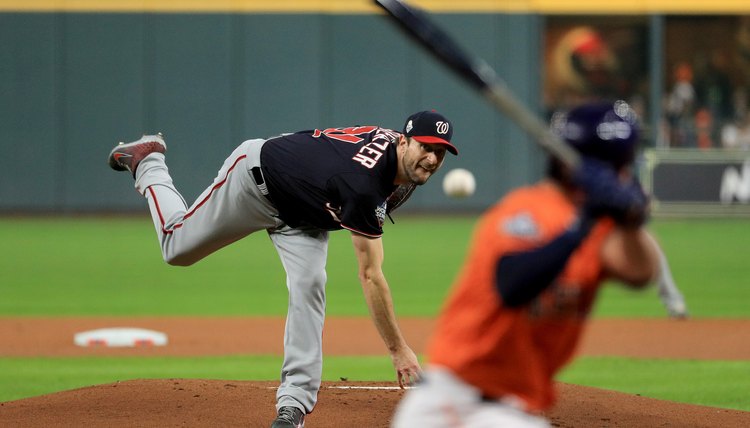
Throwing the right baseball pitches - whether you are a starting pitcher in Little League, a reliever in Minor League, or an MLB All-Star - can confound a batter and earn you a strikeout, your team an out, or better yet, earn you a no-hitter. One of the main types of pitches is the fastball, which can be varied by the pitcher's grip, wrist motion, pitcher’s arm speed and angle of delivery toward home plate.
The cutter and the running fastball are two ways of throwing a fastball.

Running Fastball
A running fastball is thrown by a right-handed pitcher to a right-handed hitter or a lefty pitcher to a left-handed hitter. The ball breaks -- or angles -- to the inside of the batter's hands -- towards the torso of the body. Pitching coach John A. Bagonzi notes that the running fastball can be the most effective fastball pitch, especially if it is very fast and turns late in its travels.
Cutter
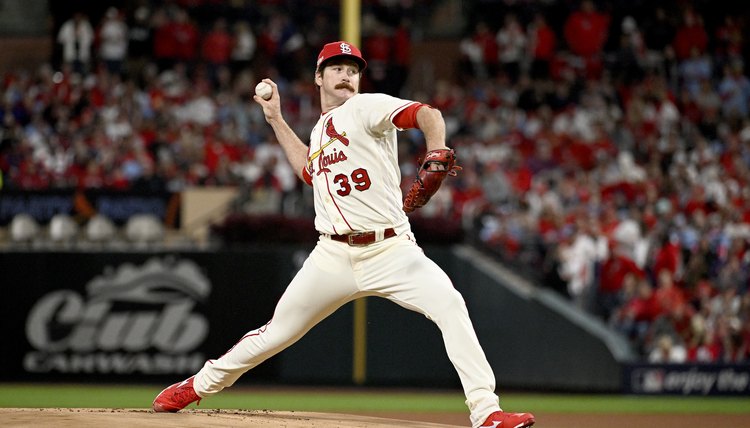
A cutter is a type of fastball that goes to the inside of a batter’s body, but is thrown by the opposite hand of the pitcher -- for example, left-handed pitchers against right-handed batters. This pitch type, thrown by Major League Baseball great Greg Maddux, looks like it will pass straight over the plate, but curves at the last second, often causing the batter to strike out.
Differences in Velocity
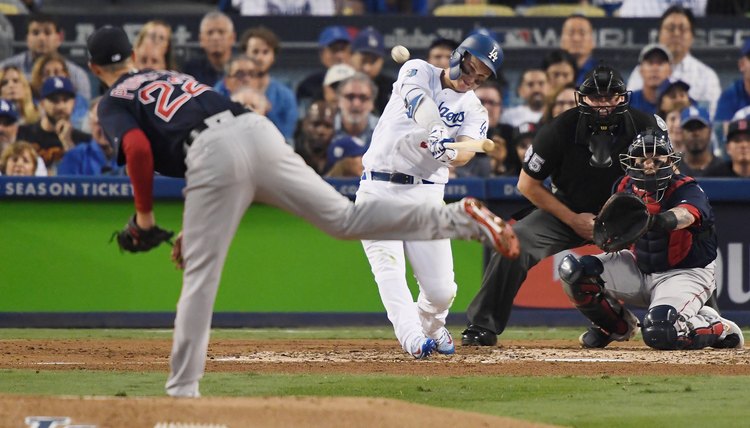
The differences in the pitches come down to which hand the pitcher throws the ball and hand grip. For running fast balls, it is righty pitchers to righty batters or lefty to lefty, and for cutters it is righty to lefty or, rarely, lefty to righty.
Cutters require pressure from the middle finger and a slight spin that helps it turn -- or cut -- late enough to surprise the batter, notes Bagonzi. To throw a running fastball, a three-quarter arm motion with pressure from the index finger put on an 11 o’clock position on the ball helps create the movement of the ball at the last moment. Running fastballs can usually reach full velocity, while cutters may be 2 to 3 mph slower.

Elements of Confusion
While both pitches can fool a batter, a cutter is particularly deceiving as it looks a lot like a regular fastball, Bagonzi explains. While a cutter seems much like a slider, a cutter is more subtle. The slider has a more defined spin, but a cutter is almost impossible to see until it is too late.
Mixing these pitches in with a curveball, four-seam fastball, sinker, changeup, two-seam fastball, cut fastball, splitter, forkball, screwball, or even a knuckleball will surely knock hitters off-center and catch them off guard, leading to easy ground balls or strike outs early in the inning.
New York Yankees’ Mariano Rivera’s Cutter video
Mariano Rivera's cutter is a pitch people have tried for a long time to emulate. A basic YouTube search gives you thousands of people trying to do just that. Here is one such video.
References
- TheCompletePitcher: Different Baseball Pitches
- Sports Mogul: Glossary of Pitches
- TheCompletePitcher.com: Pitching Grips - How To Grip And Throw Different Baseball Pitches
- Coach and Athletic Director: What Makes Greg Maddux So Good and Can We Teach It?
- The Pitching Professor: Doctoring the Fastball
- On The Mound with Greg Maddox; Matt Christopher
Writer Bio
Andrea Cespedes is a professionally trained chef who has focused studies in nutrition. With more than 20 years of experience in the fitness industry, she coaches cycling and running and teaches Pilates and yoga. She is an American Council on Exercise-certified personal trainer, RYT-200 and has degrees from Princeton and Columbia University.