Things You'll Need
Clamps
Welding temperature crayons
Propane torch
Fire blankets
MIG welding machine
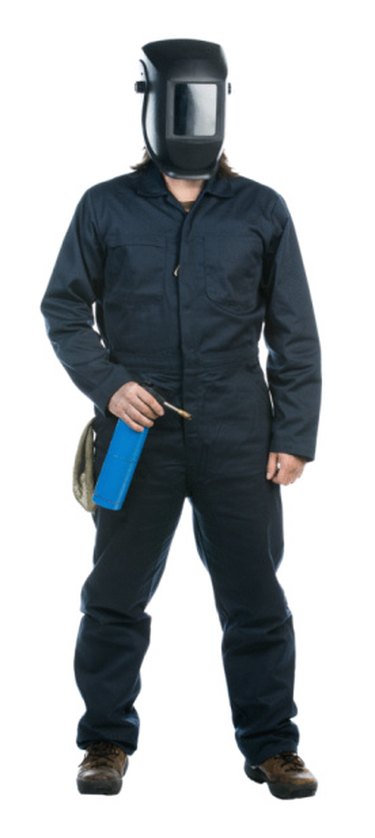
Hardened steel is a form of high carbon steel that has been tempered through a heating process to make the metal more durable. Welding hardened steel can be tricky because the heat used in the welding process may cause the metal surrounding the weld joint to become brittle if proper heating and cooling methods are not used to prepare the metal. However, by utilizing appropriate post-welding heat treatments and choosing weld joints that evenly distribute stress on the metal, you can successfully weld hardened steel.
Step 1
Clamp the pieces of hardened steel together so they do not shift during the welding process.
Video of the Day
Step 2
Mark both sides of the welding area with welding temperature crayons. The special heat sensitive wax-like crayons leave marks on the metal that melt when they approach various temperatures. These marks can help you avoid over-heating the hardened steel.
Step 3
Preheat the area that you will be welding with a propane blow torch for three to five minutes. The purpose of warming the metal is to prevent its crystalline structure from changing due to the sudden high heat of a welding spark.
Step 4
Weld the hardened steel together along the metal seam using a metal inert gas (MIG) welding machine. Check the temperature of the hardened steel before making multiple passes of the welding torch to create deeper welding penetration.
Step 5
Place a fire blanket over the weld area once you have completed welding the joint so the metal cools at a slower rate.
Warning
Consult a structural engineer before welding joints on any load bearing structure. Always wear a welder's mask and gloves when welding. Do not use a welding machine or propane torch near flammable materials.
Video of the Day