

Demonstration
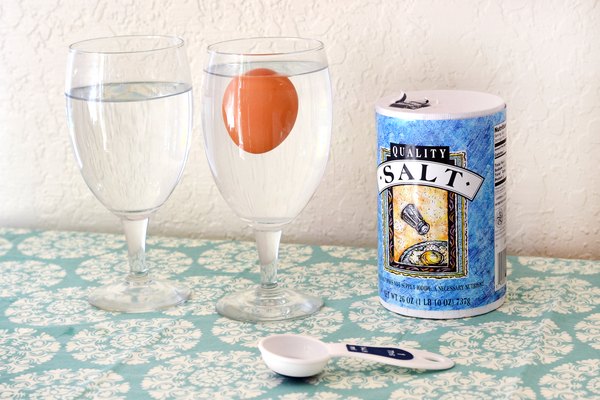
Fill two clear glasses with lukewarm water. Pour 1 tablespoon of salt into one glass, and stir until the salt dissolves. Gently drop a fresh egg into the plain water. The egg will sink to the bottom. Remove the egg and place it in the saltwater. The egg will float.
How It Works
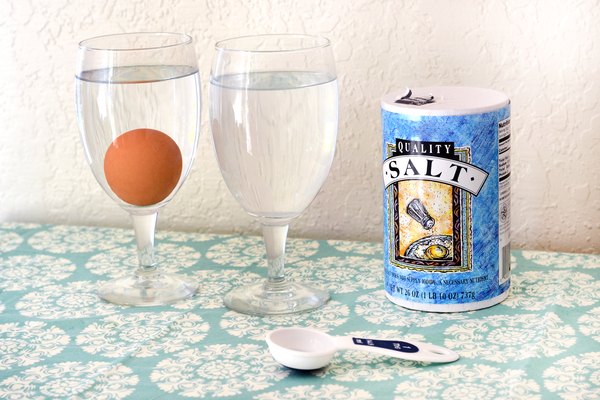
Objects sink in liquids when their density is greater than that of the liquid. Conversely, objects float when the density of the liquid is greater than that of the object. An egg has greater density than plain water, so it sinks. Salt increases the density of water, however. The denser the water, the easier it is for an egg or other object to float.
More About Density
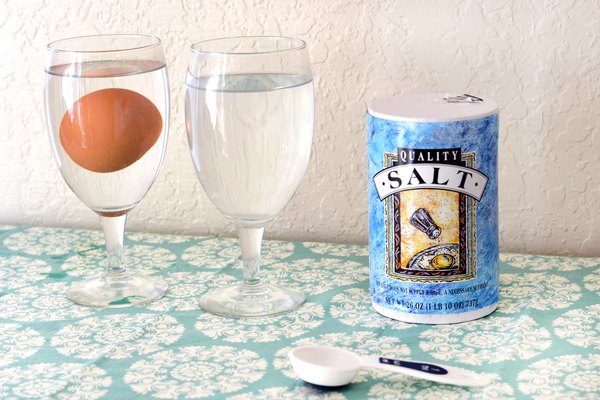
The higher the salt content of water, the higher an object will float. If you add less than 1 tablespoon of salt to a glass of water, it is possible to make the egg float in the middle. This also can be accomplished by adding 1 tablespoon of salt to water and not stirring. Because the salt is denser than the water, the salt will sink. When you drop the egg into the water, it will sink through the plain water until it reaches the saltwater at the bottom of the glass. The density of the saltwater prevents the egg from sinking any lower, so the egg will float in the middle of the glass.
References
About the Author
Angela Powell Watson has written for dozens of print and online resources, and recently published her first book. Watson holds a Bachelor's degree in Early Childhood Education and Art from Hood College, a Master's degree in Curriculum and Instruction from Western Maryland College and National Board Certification as an Early Childhood Generalist.
Photo Credits
Steve Baccon/Photodisc/Getty Images