
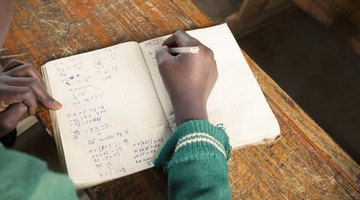


Precalculus, which includes elements of algebra and trigonometry, is a prerequisite for studying calculus. If you want to enroll in a calculus class in the fall semester, you might need to take precalculus over the summer. You can sign up for a summer precalculus class through a local high school or community college or you can teach yourself the basics of precalculus.
Look for precalculus courses offered through your high school or local community college. You may even be able to take college classes online. Taking a class usually costs money, but you'll also have more resources and structure.
Create a schedule if you are studying by yourself. Count the chapters in your precalculus book and divide that by the time you have to study, making sure you don't count time you will be on vacation. If you have a final exam or placement test at the end of the summer, make sure you plan to finish the textbook a week or two early to allow yourself time to review and prepare for the exam.
Set aside a specific time and place for studying and homework and stick to it. Keep paper, pencils, your textbook, your graphing calculator and graph paper in this location. It can be difficult to do schoolwork in the summer when your friends are socializing, but having a specific time will help you stay committed. For best results, choose a time earlier in the day, so when you're finished, you can relax and have fun with your friends.
Identify resources for help, such as past teachers, older siblings, relatives and friends. Always ask for help when you're confused; it can be tough to catch up if you fall behind. If you tend to struggle with math, consider planning to meet regularly with a precalculus tutor to help you stay on track.
Connect precalculus topics to real-world applications to check your understanding and cement the topics in your memory. For example, understanding exponential functions helps you model population growth or bacterial growth, while understanding logarithmic functions helps you conceptualize the difference between substances with a different pH level.
Take any chapter tests or reviews in the book if you are studying by yourself. This helps you check your understanding. If you perform poorly on any tests, go back and review your errors. Even if you don't have to take a final exam or pass an entrance exam for your calculus class, you'll need to understand the fundamentals of precalculus before you master calculus.
Warning
Don't let yourself fall behind. If you tend to procrastinate, give a copy of your schedule to a parent or friend so he can hold you accountable.
Related Articles







References
Warnings
- Don't let yourself fall behind. If you tend to procrastinate, give a copy of your schedule to a parent or friend so he can hold you accountable.
Writer Bio
Rebekah Richards is a professional writer with work published in the "Atlanta Journal-Constitution," "Brandeis University Law Journal" and online at tolerance.org. She graduated magna cum laude from Brandeis University with bachelor's degrees in creative writing, English/American literature and international studies. Richards earned a master's degree at Carnegie Mellon University.