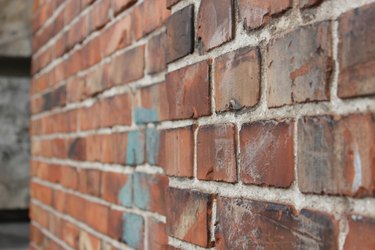
Muriatic acid is one of the best cleaners for hard water deposits on bathroom walls, and it's the go-to product for cleaning efflorescence, scale and stains off of concrete and brick -- but it's not a product to take lightly. A weak form of hydrochloric acid, it's one of the most corrosive cleaners you can buy, and it will make short work of plants, unprotected painted surfaces, and your skin and eyes if used incorrectly. As long as you understand and follow the safety precautions, however, you'll find muriatic to be a valuable cleaning resource for tough cleaning jobs inside and outside the house. If you own a pool, you'll need muriatic acid to maintain the appearance of the decking as well as the pH of the water.
Using Muriatic Acid Safely
Video of the Day
As commercially available acids go, muriatic acid is stronger than most. Contact with skin and eyes can cause permanent damage. Follow these guidelines to prevent injury, as well as damage to items around the house:
Video of the Day
- Wear protective gloves and goggles. When working in a poorly ventilated space, you should also wear a respirator.
- Always add acid to water -- never the other way around. Pouring acid into water creates an exothermic reaction that could splatter acid all over you. Similarly, always pour acid into water -- never into an empty container.
- Mix muriatic acid with water in a glass, ceramic or acid-resistant plastic container.
- Never mix muriatic acid with other cleaners or chemicals. Mix it only with water.
- Flush your skin or eyes with plenty of water if they come in contact with muriatic acid. Seek medical attention if redness or a burning sensation persist after flushing.
- Dispose of used cleaning solution by pouring it into a large container of clear water to further dilute it to at least 50:1. You can then pour the diluted acid safely down the drain.
Cleaning Bathroom Surfaces
Muriatic acid effectively removes hard water deposits from stone and tile, although it's too strong to use on fiberglass, acrylic or finished wood. (Use vinegar to remove scale from these surfaces.) Here's a simple procedure for removing scale from stone and tile, and grout haze from new tile:
Step 1: Mix
Add 1 part muriatic acid to 5 parts water in a glass or ceramic bowl. To avoid damage from an accidental spill, do the mixing outside.
Step 2: Scrub
Dip a nylon kitchen scrubber (not steel wool) in the mixture, and scrub the scale or haze you want to remove. In most cases, this won't require much effort. You should, of course, be wearing rubber gloves.
Step 3: Rinse
Rinse the area you scrubbed with plenty of clear water, then let it air-dry.
Cleaning Concrete and Masonry
Muriatic acid will remove stains and scale from concrete and masonry. In addition, it's the best product for removing efflorescence -- the white salt deposits that leach onto the surface from contaminated groundwater or moisture within the concrete. If you have to clean a large area, you may need to use a sprayer, and if you use a plastic one, expect to replace it after the job is complete.
Step 1: Mix
Prepare a cleaning solution by mixing 1 part muriatic acid with 10 parts water.
Step 2: Rinse
Wet down the surface you're going to clean with clear water. This prevents the acid from "burning," or discoloring, the surface.
Step 3: Spray or Brush
Apply the muriatic acid with a sprayer, or brush it on using a hard-bristle broom or a scrub brush. Allow it to remain on the surface until the stain or efflorescence begins to lift, which could take anywhere from 10 minutes to overnight.
Step 4: Rinse Again and Scrub
Wash off the muriatic acid with plenty of clean water, then scrub what remains of the stain or efflorescence using a scrub brush. If the muriatic acid treatment is part of a larger cleaning effort, this is a good time to power-wash.