

How to Get Rid of Ants Looking for Water

Ants are social insects that belong in the same order as wasps and bees. They are beneficial to humans because they consume many pest insects. Ants can become a problem, however, when they find their way into your home or yard in search of food or water.
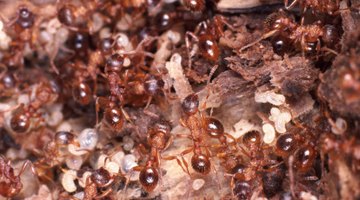
Ants can deliver a very painful sting that can cause itching, swelling and even anaphylactic shock in persons allergic to their venom. If you discover ants in your home or lawn, treat them immediately for the safety of your family and pets.
-
Get rid of any standing water on your property. Remove catchbasins, water coolers, planters or other equipment that can provide a water source for ants.
-
Eliminate water sources inside your home. Ants will invade your home in search of a water source. Fix any plumbing leaks and sponge off dish drainers.
-
Keep your house clean and sanitary to deter ants. Clean up spills and crumbs as they occur, and cover food in tightly sealed containers or in the refrigerator.
-
Sprinkle some boric acid around baseboards or behind appliances to kill ants that come into your home. Boric acid is deadly to ants and cockroaches but is low in toxicity to people and pets.
-
Caulk any cracks or holes in your home’s foundation to prevent ants from entering. Use weather stripping around windows and doors to eliminate possible entry points for ants.
- Boric acid
- Caulk
- Weather stripping
Things You Will Need
Warning
Boric acid is considered safe but should not be ingested. Keep out of the reach of children and pets.
References
Writer Bio
Based in Statesboro, Ga., Emily Jones has been writing professionally since 2009. Her articles appear on various websites, specializing in the diverse topics of cleaning and insects. Jones is a graduate student studying education at Georgia Southern University.
Photo Credits
- John Foxx/Stockbyte/Getty Images
- John Foxx/Stockbyte/Getty Images
More Articles

