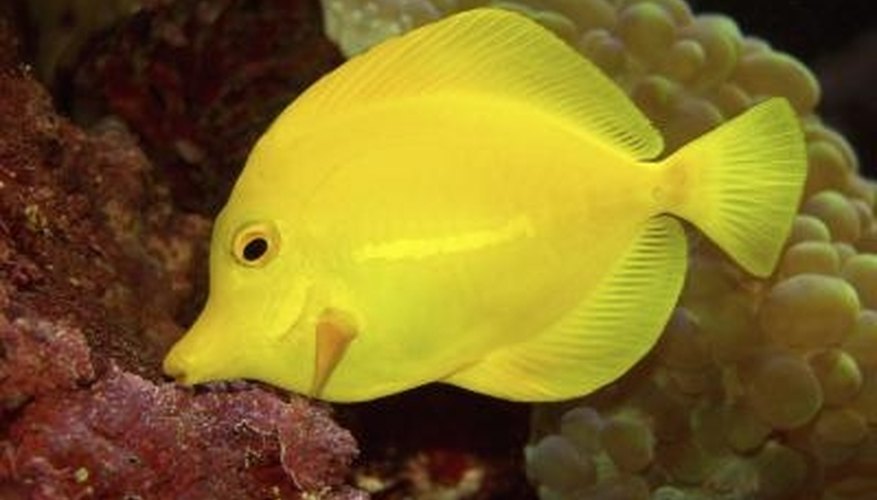


Clamped fins is a condition among aquarium fish in which the fish continually holds its fins folded against the body. The fins are not fanned out and the fish is listless. Clamped fins does not indicate one specific disease. Instead, clamped fins can indicate a few different problems such as bad water quality or parasites. Therefore, you have to determine the exact problem to treat the fish. Regularly providing a clean, healthy environment for your fish should prevent clamped fins. However, if you observe your fish carefully each day, when clamped fins appear, you will have plenty of time to do remedy the problem.
Figure out what the fundamental cause of the clamped fin is and treat that. The most common cause is ich, which appears as white spots on the fish that look like salt crystals. Another common cause is velvet, which looks like a dusty, velvety rust or yellow coating on the fish. Treat the fish immediately because diseases like velvet can be fast and fatal. Ask your local aquarium or pet shop staff for a medication to remedy the problem. Follow the label directions for medicating the tank.
Test the water quality of the tank, especially if you do not see any evidence of an infection. The pH of the water can suddenly change, stressing the fish and causing clamped fins. Add aquarium chemicals to the water to bring the pH back into a healthy range for the type of fish you have.
Do a water change of 25 to 50 percent of the water in the aquarium. This helps balance the pH and also removes free-floating parasites or bacteria in the water. Do the water change only if the medication regimen allows it. Some medications recommend waiting a period of time before the water change because the medication can then be removed from the water after it has done its job.
Dissolve some aquarium salt, not table salt, in the aquarium. Generally, a tablespoon of salt for every five gallons of water is sufficient. The salt prevents the growth of bacteria and parasites. Make sure your fish can tolerate salt. Some fish such as Corydoras catfish, will die from salt in the water.
Tips
- New fish recently added to the aquarium can bring in disease because of exposure to many other fish and unstable living conditions. Scrutinize fish closely when selecting them for purchase. Do not buy fish that are sluggish or have blemishes on the skin. Keep a close eye on the tank after you add new inhabitants.
References
Tips
- New fish recently added to the aquarium can bring in disease because of exposure to many other fish and unstable living conditions. Scrutinize fish closely when selecting them for purchase. Do not buy fish that are sluggish or have blemishes on the skin. Keep a close eye on the tank after you add new inhabitants.
Writer Bio
Karren Doll Tolliver holds a Bachelor of English from Mississippi University for Women and a CELTA teaching certificate from Akcent Language School in Prague. Also a photographer, she records adventures by camera, combining photos with journals in her blogs. Her latest book, "A Travel for Taste: Germany," was published in 2015.