How to Setup an Electroscope Science Experiment

How to Setup an Electroscope Science Experiment thumbnail
Static electricity can build up on non-conductive surfaces like balloons.

Static electricity is an accumulation of electrons on some non-conductive material such as a rubber balloon. Like magnets, electrons are attracted to protons, and when the air is humid, electrons can travel through the air to pair up with them. When the air is dry, the electrons are trapped until some pathway is available for them to discharge. This rapid discharge is what sometimes shocks you when you touch a metal object. An electroscope is a device for detecting static electricity, and with it you can discover what objects have accumulated electrons built up on their surface.

Things You'll Need

  • Glass pickle jar
  • Drill
  • Soda straw
  • Super glue
  • 12 inches bare copper wire, 12 or 14 gauge
  • Needle nose pliers
  • Aluminum foil
  • Scissors
  • Brad nail
  • Balloon
Show More

Instructions

    • 1

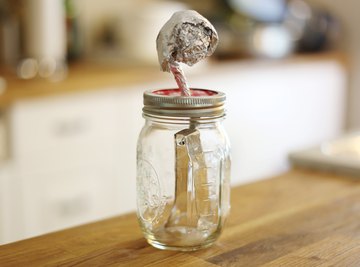
      Drill a 1/4-inch hole in the center of the jar's lid. Use the drill to enlarge the hole if necessary so that you can slide the soda straw into it. Cut a 4-inch length of straw and insert it halfway into the hole so that you have 2 inches of the straw on either side of the lid's surface. Glue the straw into place such that it will stand upright when the lid is on the jar.

    • 2

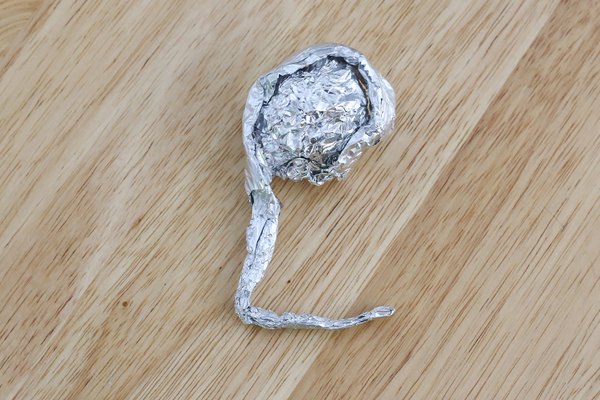
      Bend the wire at the halfway point to form a 90-degree angle. With the pliers parallel to one leg of the angle, secure the other leg right next to where you made the bend. Start wrapping this second leg around to form a spiral disc with the tip of the pliers at the center. In the end you should have what looks like a copper flower with a 6-inch stem.

    • 3

      Insert the 6-inch copper stem into the soda straw such that the spiral disc can rest on the top of the straw. Two inches of the wire should protrude from the bottom end of the straw. With the pliers, bend the length of wire that is protruding into a hook shape.

    • 4

      Fold a piece of aluminum foil onto itself so that you can cut out two identical patterns at the same time. With the scissors, cut out an oblong egg shape 1 1/2 inches in length that almost looks like a tear drop with one end narrow and the other wide. Since you doubled the aluminum foil over, you should end up with two identical egg shapes.

    • 5

      Line up the two egg-shaped pieces of aluminum foil so that you can make a hole in the same place through them both. Using a brad nail, puncture a hole near the edge at the narrow end of your egg-shaped pieces.

    • 6

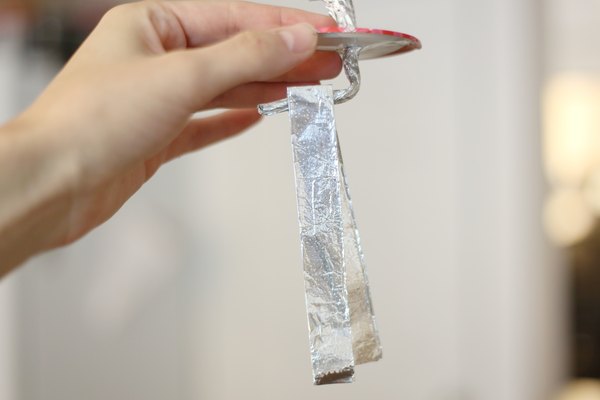
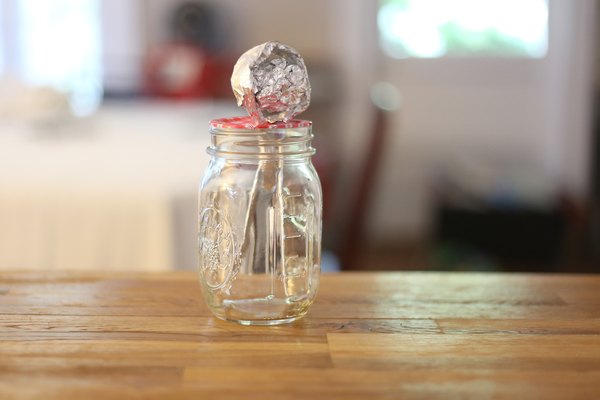
      Slide the copper hook through the hole and flatten out any crinkles that you may have made in the aluminum foil. Screw the lid on the jar, and your electroscope is ready. The two pieces of aluminum foil should be dangling from the hook face to face with the wide end of the egg shape toward the bottom.

    • 7

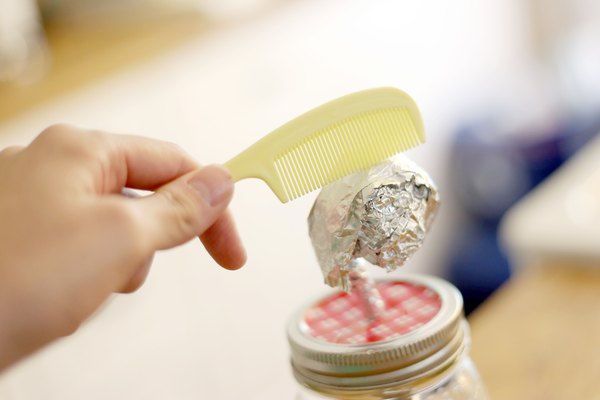
      Rub a balloon against your hair and position it near the spiral coil of your electroscope. You should see the two pieces of aluminum foil separate kind of like a butterfly spreading its wings. This indicates that you have a build up of electrons on the balloon's surface.

Tips & Warnings

  • Rub a piece of fur against various plastic objects and use your electroscope to detect if there's any static electricity present.

  • Make sure that all the parts of your electroscope are clean and dry. Small amounts of moisture can prevent it from working properly.

  • Be cautious when using the drill and make sure the lid is held firmly in place while drilling.

  • File down any sharp edges on the copper wire.

Related Searches:

References

  • Photo Credit Elizabeth Hachem/Lifesize/Getty Images

Comments

You May Also Like

  • How to Make an Electroscope for a Science Project

    Making an electroscope for a science project is not only exciting, but easy. An electroscope is a scientific measuring instrument that detects...

  • Uses of Gold Leaf Electroscopes

    Uses of Gold Leaf Electroscopes. The gold leaf electroscope has been used by physicists for hundreds of years. It indicates the presence...

  • Materials for an Electroscope Experiment

    Electroscope experiments are simple and inexpensive to conduct. Students who are homeschooled can build their own electroscopes to test the photoelectric effect...

  • Easy Electricity Science Projects

    Easy Electricity Science Projects. Children can learn all about electricity using simple and easy-to-find items. The following science projects can be completed...

  • What Are the Different Types of Electroscope?

    What Are the Different Types of Electroscope?. Electroscopes use mechanical means to help detect electric charges in substances. Electroscopes have been created...

  • Tricks with Straws

    Tricks with Straws. Modern straws were invented in 1888 by Marvin Stone. He was able to create a straw by wrapping a...

  • Experiments on Photoelectric Effect

    Photoelectric effect experiments illustrate the abstract concept of particle-wave duality in concrete form. High school physics students benefit from hands-on ...

  • How to Make a Glass Jar Electroscope

    A leaf electroscope is a sensitive instrument used for the accurate measurement of very small electric charges. Two leaves of extremely thin...

  • How to Get a Styrofoam Electroscope to Work

    An electroscope is a scientific device that detects and indicates the presence of an electric charge. Using the principle of like-sign charge...

  • Science Projects With Soda

    Science Projects With Soda. The physical properties of soda can make for some educational and entertaining science projects. Even different types of...

Related Ads

Featured