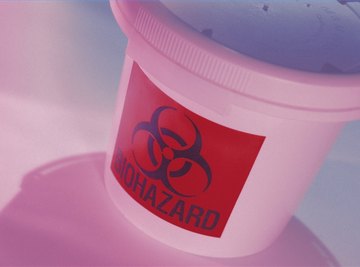

Things You'll Need
- Red biohazard waste plastic bags
- Red plastic-lined biohazard boxes
Biohazard waste is medically used trash contaminated with blood or other infectious materials. Autoclaving of these items is the normally performed process. Sharps (needles, syringes or similar objects) from research projects are deposited in biohazard waste disposal boxes.
It is always a good idea to review the regulations on the disposal of biohazard waste. Do not use red plastic-lined biohazard boxes as receptacles for disposable biohazard liquids.
Accumulate the contaminated items. Use a 10 percent bleach solution to sterilize the waste product before disposal. Place the autoclaved items in the designated biohazard waste area. Needles and disposable scalpels fall into this category, as well as in the sharps category.
Put viral or bacterial infected biohazard waste products in a red trash bag or a sealed medical waste box. Set the biohazard bag in the pre-chosen area for pick up. This could include tissue, blood samples and bone fragments.
Place sharp items like broken lab glass, blades and other dangerous objects, into a sharps container. Place it into a prepared medical waste box. Label it and notify the janitor you have a biohazard waste box for them to pick up.
Add disposable padding to chemicals and pharmaceuticals used in the research and put it in the red plastic lined box. Before sealing the biohazard bag or box, label it with the contents, date, contact person and originating location information.
Discard the waste from research projects in red plastic-lined biohazard waste disposal boxes. Animal organs, body parts and cadavers must be disposed of in this manner, after the research is finished.
Check with risk management in your company to see how to handle liquids. Some regulations permit you to pour larger amounts of biohazard liquids while others forbid it.
Warnings
About the Author
This article was written by the CareerTrend team, copy edited and fact checked through a multi-point auditing system, in efforts to ensure our readers only receive the best information. To submit your questions or ideas, or to simply learn more about CareerTrend, contact us [here](http://careertrend.com/about-us).