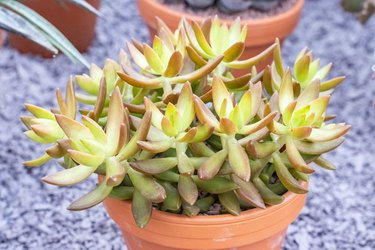
How to Care for Golden Sedum

Golden sedum (Sedum kamtschaticum) is a fast-growing sedum often used as an attractive ground cover on dry, difficult slopes or banks. Each plant reaches a height of 9 inches, with a spread of up to 2 feet. During the summer, golden sedum is adorned with masses of tiny, bright yellow, star-shaped blooms. Golden sedum, suitable for growing in U.S. Department of Agriculture hardiness zones 4 to 9, has something to offer year-round, as the bright green foliage turns a shade of golden bronze during the winter months. Once planted, golden sedum requires virtually no maintenance. Does this Spark an idea?

Things You'll Need

  • Shovel
  • Compost or sand
  • General-purpose granular fertilizer
  • Mulch
  • Garden fork
Show More

Instructions

    • 1

      Plant golden sedum where the plant is exposed to bright sunlight. Golden sedum survives in partial shade, but the plant will be healthier and the colors brighter in full sunlight. While golden sedum tolerates poor soil, the soil must drain well. Like all succulents, sedum rots in soggy soil. To improve drainage, dig in 2 to 4 inches of compost or sand at planting time.

    • 2

      Water golden sedum only during warm, dry periods, as an inch of moisture per week is plenty to keep the plant healthy. Provide the water once every week, then allow the soil to dry before watering again. Never allow the soil to remain wet.

    • 3

      Feed golden sedum only once every year. Use a general-purpose granular fertilizer applied at a rate of one small handful of fertilizer for each plant. Always water immediately after applying fertilizer.

    • 4

      Spread a 2-inch layer of mulch around each golden sedum plant, but apply the mulch carefully so the mulch doesn't come in contact with the foliage. Use a mulch such as shredded pine bark or dry grass clippings.

    • 5

      Divide golden sedum every three to four years to keep the plant neat and to promote vigorous growth. To divide golden sedum, dig the plant with a garden fork or shovel, then pull the plant into smaller sections. Each small clump will root, as long as the clump has four or five shoots and a healthy root system. Prepare a sunny spot for the divisions ahead of time, then plant the divisions in the prepared spot immediately.

Related Searches:

References

Comments

You May Also Like

  • Shade Sedum Plants

    Shade Sedum Plants. Sedum consists of a large group of succulent evergreen or deciduous plants in a wide range of sizes, shapes,...

  • How to Plant Sedum

    Sedum is an autumn flowering perennial, a low maintenance succulent of which there are many dozens of varietals. They are extremely drought...

  • How to Grow Sedum

    Learn how to plant and care for sedunm in this series of greenthumb gardening videos from our year-around garden expert.

  • How to Care for Sedum

    Sedum is a lovely plant that blooms late in the season and looks good from early spring to late fall. Sedums are...

  • When to Plant Creeping Sedum

    Creeping sedum (Sedum spurium) is an attractive ground cover that thrives in a variety of conditions and spreads quickly, even in difficult...

  • How to Get Rid of Orange-Red Tones When You're Coloring Hair

    Hair can easily turn to an orange-red, or brassy color, when it's not dyed the proper shade. If your hair has a...

  • How to Care for a Sedum Rubrotinctum Plant

    Sedum rubrotinctum, more commonly called pork and beans plant or jelly bean plant, is native to Mexico.This sedum requires a lot of...

  • How to Plant Sedum in a Shallow Container

    Gardeners prize the sedum plant as a hardy succulent that grows and flowers in inspiring pinks, light pinks and rosy reds in...

  • How to Take Care of Sedum Adolphi

    Golden Sedum (Sedum adolphi) is a low-growing succulent plant with pointed dark green leaves. The leaves develop orange or reddish tips when...

  • How to Grow Sedum Spectabile

    Succulent leaves, which are rounded and thick, add texture, and bright pink, late-summer flowers make this perennial (meaning it grows back year...

  • How to Root Sedum

    Sedum, or stonecrop, is an easy-to-care-for plant that many gardeners enjoy propagating. Rooting sedum makes it easy to start new sedum plants...

  • Sedum Plant Care

    Sedums (Sedum spp.), also known as gold moss or stonecrop, are succulent perennials that grow from three to 30 inches tall. In...

  • How to Care for a Plant Called Sedum

    Sedums, commonly called stonecrops, are succulent flowering plants that come in many different varieties. Depending on the variety, sedums bloom in white,...

  • How to Winter Over Sedum Plants

    There are 400 different species of sedum. Some are low, spreading plants that fill in cracks and crevices in stone paths and...

  • How to Grow Sedum as a Ground Cover Plant

    When low maintenance and beauty are your desires for a ground cover, you can achieve both goals by selecting a low-growing sedum...

  • How to Propagate Sedum Plants

    Native to the mountainous parts of the Northern Hemisphere, the Sedum genus comprises more than 400 species of succulent plants. Sedums, also...

Related Ads

Featured