Cuteness may earn compensation through affiliate links in this article.
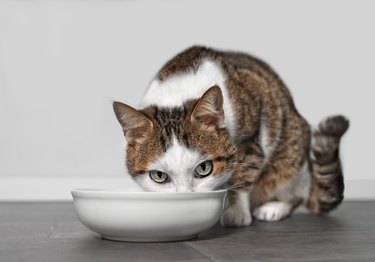
As they age, some cats grow lazier and fatter, spending their days soaking up the sun on the porch and begging for treats. But other cats begin to lose weight and some becoming disconcertingly bony. They might continue to chow down as soon as their dish is set in front of them, but still shed pounds, losing both fat and muscle mass. Other cats will take a disdainful sniff of a formerly favorite food and amble away from it.
Video of the Day
Video of the Day
Just as in humans, cats' acute sense of smell may decline with age, and food becomes less palatable. They may lose teeth or the teeth they have may hurt while they chew. Sometimes a disease is to blame for a cat's weight loss. Cats with hyperthyroidism, for example, still gobble up their food, but become skinnier and skinnier.
If your older cat is losing weight, cancer might be a cause. Thus, the first step in getting your too-thin older cat to pack on a couple pounds is a trip to the vet to try to ferret out why she's losing weight.
Tooth and gum problems
Cats may eat less because it's just too painful to chew crunchy pieces of dry food, or wet food may irritate inflamed gums or mouth ulcers. Oral cancer can also cause a cat to stop eating. Look for such signs as a lost tooth, facial swelling, bad breath, drooling, or dropping food outside his bowl.
Is there an ideal weight?
It's important to find out how much weight your cat has lost as a starting point. A domestic mixed-breed cats should weigh eight to 10 pounds, while specific breeds can weigh a bit more or less because of their size, according to the cat weight chart of the Association for Pet Obesity Prevention.
For example, a Siamese should weigh five to 10 pounds, while the Persian's ideal weight is seven to 12 pounds. The heftier Maine coon normally weighs anywhere from 10 to 25 pounds. But if you're noticing your 16-year-old cat is getting skinny and slipping beneath these guidelines, it's time to find out what's going on.
Underlying diseases
When the thyroid gland because overactive, a cat's metabolism revs up, sending him into a state of overdrive. He may beg for food, eat more than ever, and become more active as his body burns up calories quickly, thus causing him to lose weight. A blood test can help determine if your cat has hyperthyroidism, which is treatable with daily medication, surgery, or an injection of radioactive iodine into his thyroid gland.
Kidney disease is another illness that is increasingly likely as cats age. As cats get older, their kidneys become less adept at filtering out waste products, which can build up in the bloodstream. As cats become more sick with kidney failure, they drink more, eat less, and lose weight. Special low-protein foods can help, and giving them additional fluids under the skin can make them feel better and more interested in eating.
Feline leukemia attacks a cat's immune system and can lead to such cancers as lymphoma and fibrosarcoma. It is treated with the drug AZT. Other common feline cancers that will cause weight loss are mammary cancer and skin cancer.
High calorie cat food for weight gain
Once you determine why your older cat is losing weight, you can both attack the underlying cause and begin a program to get her to chow down at mealtimes again. Start with finding a high-calorie, nutrient dense food. Most cat foods aren't going to proclaim they will help cats gain weight because more often cats are overweight, and cat food producers more often market foods to those on a cat weight loss program.
Look for high protein foods, which also tend to be higher in calories, but talk with your vet first if your cat has been diagnosed with kidney disease because more protein can make the disease worse. Unlike in humans, loading your cat up on carbs won't help with weight gain since cats don't digest carbohydrates well.
Instinct by Nature's Variety Original Grain-Free Real Chicken Recipe is one canned food to try. Another is Purina Pro Plan Classic Adult True Nature Natural Turkey & Chicken. Another option is to feed your cat a food formulated for kittens. These quickly growing felines need higher calorie food, which can also benefit your older cat losing weight.
There are also high-calorie supplements that can quickly boost your cat's daily calorie count. Many come in gel form and are formulated to be tasty with a high concentration of minerals, vitamins, and protein. If your cat is reluctant to try it, you can place a bit on her nose or inside her mouth to get her going. Brands include Tomlyn Nutri-Cal High-Calorie Dietary Cat Supplement and GNC Pets Ultra Mega High Calorie Booster.
Making food more palatable
Just as with the old saying, "You can lead a horse to water, but you can't make him drink," so it also can go for cats. You dish up a plate of her (formerly) favorite food, she takes a lick of it and saunters away. First, make sure stress isn't leading her to forgo food. Is there a new pet or child in the home that your cat might perceive as a threat? Has the routine changed or are you chasing him around the house with the medicine dropper trying to get a new medication into his mouth?
Also, as cats age, they tend to eat smaller portions at each meal. Thus, instead of offering two meals a day, try small amounts four to six to times a day. For many older cats, their formerly reliable sense of smell that meant a delicious meal was waiting has declined to a point where the food smells and tastes bland and unappetizing.
Now's the time to try those really smelly fish flavors that may pique his interest. You can also try topping a dish of wet or dry food with favorite treats or liquid cat foods like Fancy Feast Creamy Broths or Sheba Signature Broths.
Appetite stimulants
The drug mirtazapine, originally developed to control nausea, is also an appetite stimulant when administered to cats. It has been used in pill form for years to perk up pets' appetites, and recently became available in a transdermal formula that can be rubbed on a cat's skin, such as the inside of the ear, and absorbed. This makes it easier to administer to a cat who is not interested in eating or may be vomiting. This formulation is call Mirataz.
Other drugs, such as Valium, have been shown to boost cats' appetites, but most have pronounced side effects, and most vets now prescribe mirtazapine.
Products to help your cat gain weight
Before buying any products, ask your veterinarian if they are good for your skinny cat. You may be able to purchase ORIJEN Cat & Kitten Premium High Protein Fresh & Raw Animal Ingredients Dry Food, which is made with chicken, turkey, organs, fish, and cage-free eggs. It contains 10% fruits, vegetables, and nutrients, and does not have added wheat, corn, soy, or tapioca. It's coated with freeze-dried liver, which enhances the flavor and makes it suitable for picky cats.
If your cat is having issues with her teeth and can't chew as well as she used to, then you can purchase wet cat food instead. Purina Pro Plan Adult Cat Food is made with real white meat chicken and vegetables, and the ingredients support a healthy immune system, skin, and coat. It offers 25 essential vitamins and minerals along with taurine, an amino acid. Plus, it tastes great, so even a cat without much of an appetite should love it.
Always check with your veterinarian before changing your pet’s diet, medication, or physical activity routines. This information is not a substitute for a vet’s opinion.
- Feline Nutrition Foundation: Don't Let Your Senior Cat Become a Skinny Old Kitty
- Senior Cat Wellness: How to Get a Senior Cat to Gain Weight
- MedicAnimal:Choosing The Right Food For My Senior Cat
- PetMD:Seven Most Common Illnesses in Senior Cats
- Breedsy: Best High Calorie Cat Foods
- Cornell Feline Health Center: FDA Approves Appetite Stimulantt for Cats