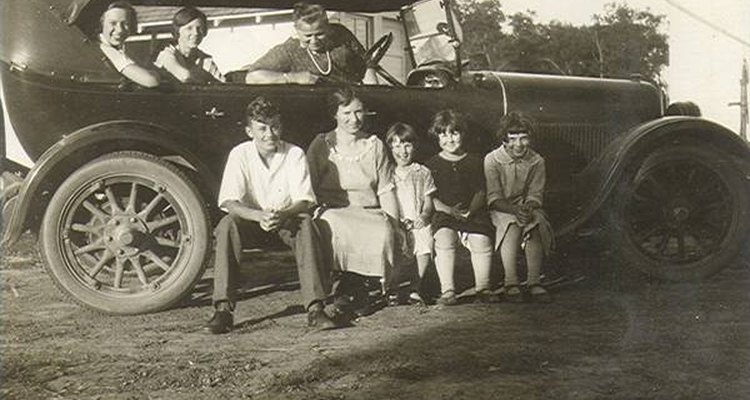
When tracing your family's history, one of the basic questions you're answering is where your family came from. All family research begins close to home, with your siblings, parents and grandparents. Start with them and branch out from there, seeking information about their parents, grandparents and so forth. Much of this data is online now, so you may be able to track your family's movements back through centuries.
Begin by interviewing family members, such as parents, cousins, and aunts and uncles. Ask them to tell you what they know about the names, birth and death dates, spouses and burial locations of their ancestors. Record the information they give you and begin creating a family tree. Ask these relatives to give you copies of any documents they have that could help with your search. Death and birth certificates, church records, family letters, newspaper clippings and newspaper obituaries are all valuable sources of information.
Look at family birth certificates. Birth certificates will list the name of the child's parents, plus where those parents were born. For example, if you know your deceased father's name and where and when he was born in the United States, yet have no idea who his parents were or where they were from, you can contact his county of birth and obtain a copy of his birth certificate. From that birth certificate you can typically discover the name of his parents, plus where they were born.
Research the census reports. Every ten years the United States takes a nationwide census. Those reports show not only the names and addresses of the residents, but where the parents of those residents were born. If you have names of your ancestors, you can trace older census reports, looking for the generation that first came to the United States. The U.S. Census Bureau protects census information for 72 years due to privacy reasons, so you can only access data that predates that.
The National Archives and Records Administration maintains census records, and you may be able to access the ones you're looking for on its site. Some genealogy sites also have digitized and searchable census databases.
Take a genetic DNA test. These tests can provide significant clues and answers as to what part of the world your family originally came from. The tests involve collecting samples from the mouth with a cotton swab and mailing those to a lab and paying a fee.
Create a profile on a genealogy site like Ancestry.com. Input the information you know to generate a family tree. On some sites users can connect to people with whom they share common ancestors. Share access to the profile with relatives so they can add to the information you already have.
Related Articles

How to Trace Your Family Tree for Free
How to Trace the History of a Name

How to Find Ancestry in Singapore

How to Trace Family History in Malta

How to Find Your Bloodline

How to Find an Old Friend in Canada

How to Find Old Friends From Elementary ...

How to Find Your Dad That You Have ...
How to Find Someone's Birth City & ...

How to Locate a Korean War Veteran
How to Find Bank Accounts of Deceased ...

How to Search for Relatives in Other ...

How to Find Your Biological Father ...
How to Find Someone's Relatives
How to Find School Records for Family ...
How to Find Lost Relatives

How to Map German Surnames

How to Find Siblings Using the Birth ...

How to Find People Looking for Me
How to Trace Haitian Ancestry
References
Resources
Warnings
- Information in census reports is subject to error, as it is only as accurate as the people originally involved in collecting the data.
Writer Bio
Ann Johnson has been a freelance writer since 1995. She previously served as the editor of a community magazine in Southern California and was also an active real-estate agent, specializing in commercial and residential properties. She has a Bachelor of Arts in communications from California State University, Fullerton.
Photo Credits
C. Johnson