


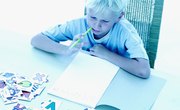
Dolch words, a collection of 220 English sight words put together by Edward William Dolch in 1948, are words frequently used both orally and in writing. To gain reading fluency, these 220 sight words must be memorized, as they are not words that can be "sounded out." They are essential to literacy. Testing children on the Dolch words can be tricky, but there are a few methods that will help children memorize and learn these sight words.
Teach the Dolch words in small, manageable groups. If you give children all 220 words to memorize at once, they will likely become overwhelmed and unable to process the information. By breaking the sight word lists into several smaller lists, children will be able to master the words a few at a time before moving on to the next small group. After studying a group of words, ask children to write the sight words they have learned on index cards and display them on the wall. Call this section of your classroom the "Sight Word Wall" and allow children to refer to it while reading or writing. As the year progresses, the amount of words will increase, giving children a sense of accomplishment when they realize just how many words they know how to read!
Ask each student to work with a partner for this activity. Give each team of two students a stack of index cards and markers, as well as the sight word list. Let the students decide how to manage the list so that each student writes half of the listed words on her stack of index cards. Once all the words have been written, have the students quiz each other by using the index cards as flash cards. Set a timer and keep track of how many words each student can read. The student who identifies the most sight words in the least amount of time is the winner.
Find children's picture books that highlight many of the Dolch sight words. Make photocopies of pages in these books and pass them out to students, along with colored highlighters. Instruct students to find the Dolch words in the books and highlight them, using the Dolch Sight Word Wall in your classroom as a guide.
Give each student a set of magnet letters and a metal surface such as a baking sheet. Call out the sight words and ask the students to spell them on their baking sheet using the magnet letters.
Related Articles






References
Writer Bio
Kara Bietz has been writing professionally since 1999. Her professional observation work has appeared in the early childhood education textbook "The Art of Awareness" by Margie Carter and Deb Curtis. Bietz has worked in the field of early childhood education for more than 16 years. She holds an Associate of Applied Science in child development from Mesa College.