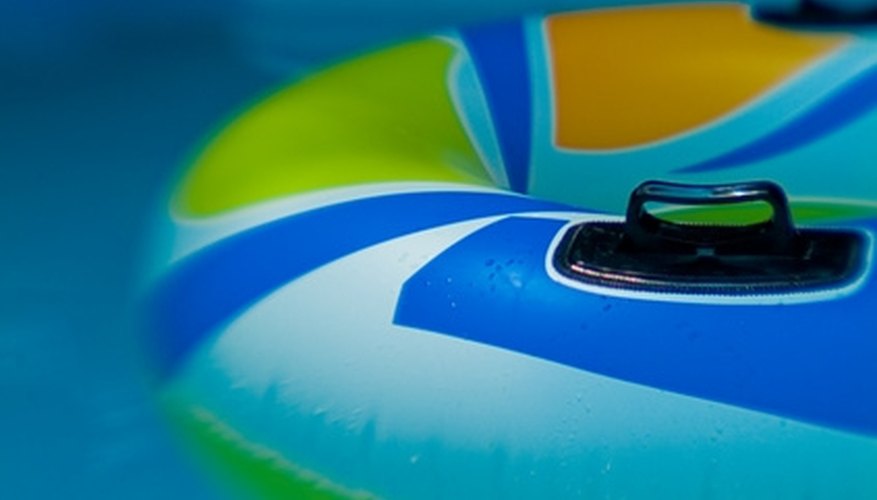


When outdoor enjoyment in the sun includes water, make sure the pool float is ready to go. Either blow up a pool float manually or use a pool float air pump to inflate it. Not only does the pool float give you an entertaining accessory with which to play, but it is also ideal for lounging on while floating on the water.
Items you will need
Air pump
Inflate Manually
Spread the pool float out flat on a work surface. Position the valve stem so it is facing up.
Pinch the base of the valve stem where it connects with the pool float between your index finger and thumb to open the valve stem.
Position your mouth over the valve stem, and blow air forcefully through the valve stem into the pool float.
Continue blowing air into the pool float until it is firm. Do not overinflate the pool float, but it should feel completely firm when you push on it with your hands.
Insert the cap into the valve stem to seal it. Push the valve stem down into the pool float, if possible, by placing your index finger on the closed stem and pushing firmly to slide the valve stem into the pool float.
Inflate With Air Pump
Spread the pool float out flat on a work surface. Position the valve stem so it is facing up.
Position the end of the air pump hose over the valve stem, and push it down securely to attach the hose to the valve stem.
Pump the air pump to inflate the pool float. Continue to pump air into the pool float until it is firm. Do not overinflate the pool float, but it should feel completely firm when you push on it with your hands.
Remove the air pump hose from the valve stem, and insert the cover into the valve stem to seal it.
Push the valve stem down into the pool float, if possible, by placing your index finger on the closed stem and pushing firmly to slide the valve stem into the pool float.
Warnings
- Never use a pool float as a water safety device. Always supervise non-swimmers in water, and use Coast Guard-approved flotation devices.
References
Warnings
- Never use a pool float as a water safety device. Always supervise non-swimmers in water, and use Coast Guard-approved flotation devices.
Writer Bio
Kathryn Hatter is a veteran home-school educator, as well as an accomplished gardener, quilter, crocheter, cook, decorator and digital graphics creator. As a regular contributor to Natural News, many of Hatter's Internet publications focus on natural health and parenting. Hatter has also had publication on home improvement websites such as Redbeacon.