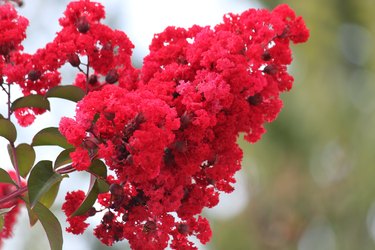
Crape myrtle (Lagerstroemia spp.) is a popular, easy to grow tree in the right setting. Blooms occur in summer, when most other trees have long since stopped blooming. These Southern favorites provide shade, and feature attractive, peeling bark and are easy to care for. Crape myrtles bloom in colors that include white, lavender, purple, deep red and bright pink, and the leaves of crape myrtles provide colorful foliage in autumn. Crape myrtles reach mature heights of 3 to 40 feet, depending on species and cultivar, but container specimens generally don't exceed heights of 5 feet. They do best in sunny areas and, once established, are drought tolerant.
Crape myrtle trees or shrubs have traditionally needed a warm climate. They flourish in U.S. Department of Agriculture plant hardiness zones 7 through 9. But if you live in a colder climate, there are many hybrid crape mytles that can survive winters in zones 4 through 6.
Video of the Day
Video of the Day
Drought Tolerance
Crape myrtle needs to be watered regularly for the first two months after transplanting. Check the soil before watering, then let a hose trickle at the base of the tree whenever the soil is dry to a depth of 3 inches. Wait a day or two to water if the soil feels cool and moist. As a rule, water once or twice per week during dry weather, about 1 inch of water per week. Once the roots are established, the tree rarely requires supplemental water. However, crape myrtle benefits from an occasional watering during hot, dry weather, especially while the tree is blooming. Water deeply and slowly to saturate the root system, then don't water again until the soil is dry. A 2- to 3-inch layer of mulch, either bark chips or compost, nourishes the soil and prevents moisture evaporation.
Regular Fertilization
Crape myrtle benefits from regular application of a balanced fertilizer with a ratio of 10-10-10 or 12-12-12. Too much fertilizer, however, can invite pests and disease and may create lush growth at the expense of blooms. Fertilize a newly planted crape myrtle 1 teaspoon of fertilizer every month from spring until late summer. After the first year, fertilize the tree each spring. To determine the amount of fertilizer, follow soil-test recommendations for an established tree. In the absence of a soil test, measure the ground under the widest part of the canopy, or top of the tree, then provide 1/2 pound of fertilizer for every 100 square feet. Sprinkle the fertilizer evenly on the ground, then water deeply.
Pests and Disease
A healthy crape myrtle is relatively disease-resistant. However, overwatering, humid conditions, lack of sunlight, overcrowding and lack of adequate air circulation may cause powdery mildew, a fungus that leaves a powdery gray or white coating on the leaves. Leaf spot and other fungal disease are less common. Plant disease-resistant cultivars, especially if you live in a warm, damp climate. Clip damaged growth and dispose of it properly to prevent spread of disease. Remove suckers, which are small sprouts that grow from the base of the plant, as this growth is susceptible to powdery mildew that travels to the main part of the tree. Crape myrtle is sometimes bothered by aphids, which can be removed with a strong stream of water at affected areas. Avoid using insecticides, which kill lady beetles and other beneficial predatory insects that keep aphids in check.
Pruning
Prune sparingly to maintain the tree's natural shape, only removing growth that is dead, dying, or rubbing against other branches. If you want to grow crape myrtle as a small shrub, it's best to buy a small cultivar instead of severely pruning large trees each year, which is an ill-advised practice by horticulturists.
Before and after pruning, sterilize your pruning tools in a solution of 1 part household bleach to 3 parts water and let air dry. Well-established trees generally require little pruning if they have been carefully pruned the first few years.
- University of Georgia Cooperative Extension: Crape Myrtle Culture
- University of Calfiornia Sonoma County Master Gardeners: Lagerstroemia Spp. (Crape Myrtle)
- University of Florida IFAS Extension: Lagerstroemia Indica: Crapemyrtle
- Bowood Farms: Lagerstromea/Crape Myrtle: Planting and Care Instructions
- Gardening Know How: Can Crepe Mrytle Grow in Zone 5?