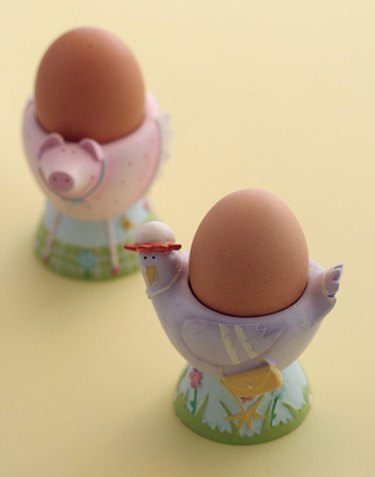
Hard-boiled eggs may be decorated for Easter or hidden in Easter egg hunts in fun games for friends and family. Hard-boiled eggs spoil faster than raw eggs, and it is important to know how to store them to avoid accidentally eating a spoiled egg and becoming sick. For quality and safety, follow simple steps for proper storage of hard-boiled Easter eggs.
Step 1
Store eggs in the refrigerator within two hours of cooking them. Eggs used for decorating or an Easter egg hunt should not be used in an activity for longer than two hours. Eggs left out for longer than two hours should be thrown out.
Video of the Day
Step 2
Hide eggs in sanitary places. If you are planning to use hard-boiled eggs for an Easter egg hunt, they should be hidden in places free of dirt and away from pets and bacteria.
Step 3
Keep hard-boiled eggs in the refrigerator until you are ready to use them (such as for an Easter egg hunt or decorating). After use, they should be put back in the refrigerator.
Step 4
Do not peel the eggs until you are ready to eat them. If you do peel the eggs, they may be stored in the refrigerator in a sealed container. The peeled eggs should be covered with damp paper towels.
Step 5
Eat hard-boiled Easter eggs within a week. Hard-boiled eggs must be stored in the refrigerator. Eggs that are left in the refrigerator for longer than a week should be thrown out.
Video of the Day