How to Care for a Euphorbia Martinii

Euphorbia martinii, a natural hybrid of E. characias and E. amygdaloides, was first discovered in the late 19th century in southern France. Smaller than its parents, Euphorbia martinii reaches no more than 2 to 3 feet in height. What it lacks in size, however, the small evergreen shrub makes up for in aesthetic appeal. Rosettes of dark green, purple-tinged leaves form an attractive base for the tall spikes of red-eyed, lime-green bracts that appear in late spring to early summer. Hardy in U.S. Department of Agriculture hardiness zones 8 through 10, this warm weather beauty cannot tolerate cold temperatures, but it thrives with only minimal care in the southern United States. Does this Spark an idea?

Things You'll Need

  • Garden tiller
  • Organic compost
  • Garden shears
  • 3-inch pot
  • Sand
Show More

Instructions

    • 1

      Select a planting site for Euphorbia martinii that has fertile, well-draining soil and receives full sun to partial shade. For the best results, choose an area that offers protection from strong winds, as most types of Euphorbia are susceptible to wind damage.

    • 2

      Plant Euphorbia martinii in early spring or fall. Till the soil to a depth of about 12 inches with a garden tiller just before planting, working in a 1- to 2-inch layer of organic compost if the soil is sandy or clay. Euphorbia does not require rich soil, but it must have good moisture retention and drainage. Dig the planting hole the same depth and width as the container in which the plant was previously growing.

    • 3

      Water your Euphorbia martinii plant once every two weeks during the heat of summer if it is located near other plants and trees. In areas where the plant does not compete for moisture, water deeply once every three weeks. Apply water once a week in hot climates if you've planted the shrub in full sun.

    • 4

      Remove spent flower stalks after they fade by snipping them off with garden shears as close to the stem as possible. Invigorate older plants by pruning them lightly in early spring before new growth begins. Prune away any damaged, diseased or wayward branches. Dip the pruned stems and branches in cold water before discarding to halt the flow of toxic sap.

    • 5

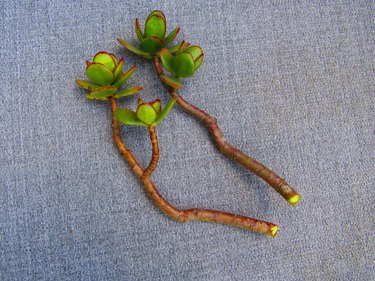
      Propagate Euphorbia martinii in fall by cutting off a piece of new growth from the base of the plant. Trim the portion to about 4 inches in length and remove the leaves from the bottom 2 inches, if any remain. Fill a 3-inch pot with 1 part sand and 1 part organic compost and plant the cutting about 1 inch deep in the mixture. Place the pot in a shady area until spring, then plant the rooted cutting in the garden.

Tips & Warnings

  • Euphorbia martinii is not a heavy feeder and does not require supplemental fertilization.

  • When propagating Euphorbia, the cutting may not produce roots by spring. In this case, leave the cutting in a shady area until fall before planting.

  • Always wear gloves when handling Euphorbia martinii. Like all other Euphorbias, the plant's stems contain a toxic, milky sap that causes rash and irritation when it comes into contact with skin. Wearing long sleeves, pants that cover your legs and goggles while pruning the shrub will help prevent injury.

Related Searches:

References

Resources

Comments

You May Also Like

  • How to Prune an Euphorbia Ascot Rainbow Plant

    The Euphorbia x martinii "Ascot Rainbow" is a perennial succulent. Heat and drought tolerant, it is an ideal addition to your Mediterranean-style...

  • How to Care for Euphorbia characias

    Euphorbia characias is a herbaceous perennial shrubby plant from the Euphorbiaceae family. The plant is commonly called spurge or Mediterranean spurge. Native...

  • How to Grow Euphorbia

    These perennials (meaning they grow back year after year) are interesting additions to the garden with their orange, red, chartreuse or yellow...

  • How to Plant Euphorbia (Spurges) in Containers

    Hundreds of different types of euphorbia, also known as spurges, exist. What they all have in common is the white milky sap,...

  • How to Propagate Euphorbia Enopla

    Native to southern Africa, Euphorbia enopla is a species of flowering succulent sometimes grown as a houseplant or outdoor ornamental in USDA...

  • How to Care for a Euphorbia Ingens Plant

    The Euphorbia ingens, also called the candelabra tree, the cowboy cactus and the good luck cactus, is a spiny, succulent plant that...

  • How to Care for Crested Euphorbia

    Euphorbia is a botanical genus containing 2,008 different plant species found in temperate, tropical and subtropical climates around the world. Many Euphorbia...

  • How to Grow a Plant Called Euphorbia

    There are over 2,000 species in the Euphorbia genus, and most gardeners know the plants by their common name, spurge. A diverse...

  • Euphorbia Rigida or Gopher Plants

    Euphorbia rigida, common name gopher plant, comes originally from the Mediterranean. Popular in warm climates for its hardiness, the gopher plant is...

Related Ads

Featured