
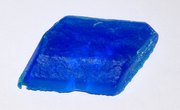
The substance 3-nitroacetophenone is a white-to-beige powder that melts at 81 degrees Celsius. The molecule consists of a benzene ring with an acetyl group (COCH3) and a nitro group (NO2) attached to it. By reacting it with tin and hydrochloric acid, you can reduce the nitro group to an amine (NH2). This procedure is a common upper-division undergraduate experiment in chemistry courses, and it is relatively straightforward to perform if you already know your basic chemistry lab techniques.
- Gloves, goggles and coat (make sure you're wearing these)
- 25 mL Erlenmeyer flask
- 4 hoses
- Steam bath
- 3-nitroacetophenone sample
- Granular tin
- 6 M hydrochloric acid
- Cork stopper
- 10 M sodium hydroxide solution
- Plastic dropper/pipette
- Glass stir rod
- pH paper
- Crushed ice
- Styrofoam/plastic container for ice bath
- Buchner funnel
- Hot plate
- 2 50 mL beakers
- Filter paper
- Neoprene adapter
- 2 ring stands with clamps
- 2 50 mL sidearm flasks
- Vacuum adapter
- Pasteur pipette
- Cold water
- Hirsch funnel with filter paper
Notice that the tin and hydrochloric acid selectively reduce the NH2 group and not the carbonyl group. If you wanted to selectively reduce the carbonyl group, you would react the nitroacetophenone with sodium borohydride instead.
Weigh out 200 milligrams of your nitroacetophenone and 400 mg of granular tin. Deposit both in the 25 mL Erlenmeyer flask.
Set up the steam bath. Steam baths look a little like a small pot with a set of concentric rings on top and two outlets on the side. Run one hose from the steam outlet to the top outlet on the bath, and run the other hose from the lower outlet to the drain. The steam will flow into the steam bath through the upper outlet and back out through the lower outlet. Add or remove rings from the top of the steam bath until you can seat the Erlenmeyer flask on it appropriately.
Add 4 mL of hydrochloric acid to the flask, and turn on the steam bath. Cover the mouth of the flask loosely with a stopper. Do not stopper it tightly -- heating a closed vessel can cause it to explode. You want to reduce evaporation but still allow enough room that air and gas can escape to relieve pressure.
Heat the contents of the flask until all the tin has dissolved, which should usually take about 25 or 30 minutes. While the flask heats, set up an ice bath by filling your plastic/Styrofoam container with crushed ice.
Turn off the steam bath, and allow the flask to cool for a couple minutes. Transfer it to the ice bath.
Add sodium hydroxide a drop at a time while stirring. Test pH periodically by taking the tip of the glass stir rod and touching it to a piece of pH paper. Stop once the solution is at roughly neutral pH.
Return the flask to the steam bath, and heat it for about 10 minutes.
In the meantime, put 5 mL of water in a beaker and heat it to boiling on the hot plate.
Set up a vacuum trap filtration system with the two 50 mL sidearm flasks. Connect the hose from the vacuum outlet to the top of the first sidearm flask using the vacuum adapter. Run a hose from the sidearm of the first flask to the sidearm of the second flask. Fit the Buchner funnel to the top of this second flask with a neoprene adapter, and rinse the inside of the funnel with a little hot water using the Pasteur pipette.
Place the filter paper in the funnel, and dampen it with a little hot water.
Turn on the vacuum, and pour the solution from the Erlenmeyer flask through the filter paper. Be careful, it's hot. If the Erlenmeyer flask is too hot to touch, pick it up with tongs instead.
Wash the precipitate trapped on the filter paper several times with boiling hot water to make sure all the product of your reaction goes through. The reaction product can dissolve in hot water though not in cold, whereas the tin oxide is insoluble, so at the end of this step, you should be left with crystallizing product in the sidearm flask and tin oxide on the filter paper.
Turn off the vacuum. Take the sidearm flask and its contents and transfer them to a beaker. Take the filter paper and the tin oxide it contains and dispose of them according to your lab guidelines.
Wait 10 or 15 minutes for the solution to cool. Place the beaker in an ice bath and wait until it is cold to the touch. You should see crystals forming. In the meantime, wash out the sidearm flask -- you will use it again in the next step.
Reattach the sidearm flask to the hose, and place the Hirsch funnel in its mouth. You're going to vacuum-filter your product again, only this time you will separate the product from the water you used as a solvent.
Turn on the vacuum again, and pour your solution into the Hirsch funnel. The product of the reaction has formed solid crystals and should, therefore, be trapped on the filter paper in the funnel, while the water will flow right through. Wash the crystals with cold (not hot) water to get rid of any remaining soluble impurities. At the end of this step, you should be left with crystals of your product on the filter paper.
Turn off the vacuum, and allow the product time to dry.
Things You'll Need
Tips
References
- "Techniques in Organic Chemistry"; Jerry R. Mohrig, et al.; 2010
About the Author
Based in San Diego, John Brennan has been writing about science and the environment since 2006. His articles have appeared in "Plenty," "San Diego Reader," "Santa Barbara Independent" and "East Bay Monthly." Brennan holds a Bachelor of Science in biology from the University of California, San Diego.