Homemade EMF Detectors

Homemade EMF Detectors thumbnail
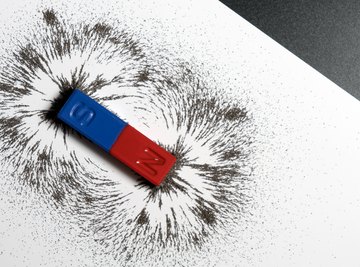
Hall Effect devices can be used to make a homemade electromagnetic field meter.

When you want to know if a magnetic field is present, or if no magnetic field is in the area, you need to use an electromagnetic field meter, or EMF meter. Another name for this device is a gauss meter, after the German physicist Carl Friedrich Gauss. These can be made from a few inexpensive electronics, and use a Hall Effect device that varies its output voltage with a change in magnetic field strength. This voltage is then displayed on a digital voltmeter, where it must then be plugged into an equation to measure the magnetic field strength.

Things You'll Need

  • Nine-volt battery
  • Nine-volt battery connector
  • Hall Effect device
  • Five-volt voltage regulator
  • Digital voltmeter
  • Wiring kit
  • Solderless bead board
  • Rosin core solder
  • Soldering gun
Show More

Instructions

    • 1

      Slide the red wire of a nine-volt battery connector into the upper power bus connection of a solderless bead board, and slide the black wire to the board's ground connection. Do not put a battery in the holder until the device is completed.

    • 2

      Bend the pins of a 5-volt voltage regulator to fit into pins one, two and three of the bead board, then slide the regulator in place. If the regulator's pins will not fit in, solder wires to the pins then slide them into the bead board.

    • 3

      Connect the power bus to pin one of the bead board using a short wire, then connect pin two to the common ground. This will send voltage from the battery into the input of the voltage regulator.

    • 4

      Bend the pins of a Hall Effect device to fit into the bead board, or solder wires to the pins if they are too small. Run a wire between pin one and pin three, then connect pin two to the common ground to connect the Hall Effect device to the circuit.

    • 5

      Set a digital voltmeter to read 20 VDC and slide the red lead into pin three and the black lead into the common ground.

    • 6

      Connect the nine-volt battery into the battery connector to turn the device on. Move the device to an area that is certainly free of magnetic fields, such as an outdoor field away from power lines, to get an initial voltage reading. The voltmeter will read about two and a half volts.

    • 7

      Move the device near a magnetic field, and observe the meter changing. You can use a strong refrigerator magnet, or you can build an electromagnet to generate a field. Multiply the difference between the calibrated zero (about two and a half volts) and the reading by 1,000, and divide by the sensitivity of the Hall Effect device.

Related Searches:

References

  • Photo Credit Photodisc/Photodisc/Getty Images

Comments

You May Also Like

  • How to Make Homemade Metal Detector

    Do you like to look for lost treasures? If so, a metal detector will do! However, don't break your wallet by purchasing...

  • How to Make a Homemade pH Meter

    A pH meter is usually an electronic device used to measure the acidity of a liquid such as the water in an...

  • How to Build an EMF Detector

    An electromagnetic field (EMF) meter or gaussmeter measures the relative strength of magnetic fields. EMF meters can be used for a number...

  • A Guide for EMF Meters

    Electromagnetic field meters are used to detect low-frequency electromagnetic fields (EMFs), such as microwaves and radio waves. Magnetic fields are measured most...

  • How to Build Your Own Motion Detectors

    Building a motion detection system can be either very simple very complicated, depending on what you choose. In this piece we will...

  • How to Measure an Electromagnetic Field (EMF)

    Electricity is part of our everyday lives but, can it also be wrecking havoc on our health? As children, we were all...

  • Homemade Gauss Meter

    If you need to measure the intensity of a magnetic field, for safety or educational purposes, you will need a gauss meter....

  • Homemade Magnets & Tips

    To construct a homemade magnet, build an electromagnet. An electromagnet is formed by a coil of wire that has a current flowing...

  • How to Use a Volt-Ohm Meter Safely

    Save yourself time and money by purchasing a volt-ohm meter. Volt-ohm meters are used to find electrical malfunctions in your home. Electricians...

  • How to Read a EMF Meter

    An EMF meter measures the flux density of an EMF radiation field. The EMF radiation field will be either Alternating Current (AC)...

  • How to Measure the EMF From Power Lines

    Whenever electrical current runs through wire, it creates an electromagnetic field or "EMF" (its strength is proportionate to the line's voltage) that...

  • How to Measure a Magnetic Field Using the Hall Effect

    The Hall Effect is the production of a voltage across an electrical conductor in the presence of a magnetic field. The magnetic...

  • How to Measure Volts Using an Analog Multimeter

    Analog multimeters perform the same voltage measuring function as digital multimeters, but the analog part of the name refers to how the...

  • How to Make a Homemade RF Detector Spy

    Soy devices can be found everywhere a person goes, and it is almost impossible to know if one is recording what you...

  • Electromagnetic Safety Issues

    Electromagnetic fields (EMF) are generated from natural occurrences and man-made devices that produce electromagnetic radiation. This radiation has elicited health ...

  • How to Reduce Computer EMF

    Electromagnetic Force (EMF) is an unfortunate aspect of technology. As tech has grown and spread, so has the threat of this unseen...

  • How to Make an AC Magnetic Field

    Natural magnets are not the only way to generate a magnetic field. You can also make one with electricity. As Ampere's Law...

Related Ads

Featured