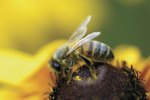
If you want to remove a beehive from an undesirable location, you have some options, although the basic steps remain the same. The best method depends on your goals: Do you want to exterminate the bees or simply relocate the hive? Of course, the safest way to remove a beehive from your residence is to call in a professional to do it for you. If you’re dealing with a hive of honeybees, you may be able to find a beekeeper who will safely take them off your hands.
Safety First
If you elect to remove the hive yourself, take safety precautions. If you have any bee allergies, you should not attempt this yourself. Evacuate household members who have bee allergies from the area. Wear clothing with a smooth texture and light color, thick gloves and a hat with a long veil to protect your head and neck. Close off the openings of sleeves and pant legs. Avoid wearing perfume, cologne, scented deodorant or body lotion, or anything else with a sweet scent that might attract the bees.
Locate the Hive
A hive might be in an obvious location, but it might also be hidden inside a chimney, the walls of your house or any other fixture with an opening, such as a birdhouse or a garbage can. A well-hidden or inaccessible hive may leave you no choice but to call in a professional. Once you locate a hive, observe how it’s attached to the structure and make a plan for how you will detach and remove it.
Subdue the Bees
Whether you decide to exterminate the bees, it’s a good idea to use a bee smoker, which you can purchase from a garden store to calm the bees. This might allow you to move the hive without damaging it or the bees. If you decide instead to exterminate the bees, use smoke to calm the bees before administering pesticides. The University of California Agriculture and Natural Resources website recommends using a vacuum to remove dead bees from the interiors of walls or attics in order to prevent them from causing rot as they decompose.
Removal and Cleanup
In some cases, it's possible to remove the hive, along with the bees and honeycomb, and transfer them safely to the woods or an unpopulated area, once they’ve been subdued or lured from the hive. Place the hive in a secure box with a lid in which you’ve poked tiny air holes. Once you reach the hive’s new location, you can smoke the bees again through the holes to calm them before you release them. If you’ve opted for extermination, simply remove and destroy the hive, and place it and the bees in a garbage bag for disposal. Be sure to tie the bag securely and place it in a garbage can with a tight lid. Once the hive is removed, clean the area thoroughly with soap and water, scraping away any honey or residue and sealing any holes with caulk to ensure bees can’t return. You can also treat the area with a natural bee repellent such as citronella or tea tree oil.
References
Photo Credits
-
Jupiterimages/BananaStock/Getty Images
Writer Bio
Jean Marie Bauhaus has been writing about a wide range of topics since 2000. Her articles have appeared on a number of popular websites, and she is also the author of two urban fantasy novels. She has a Bachelor of Science in social science from Rogers State University.