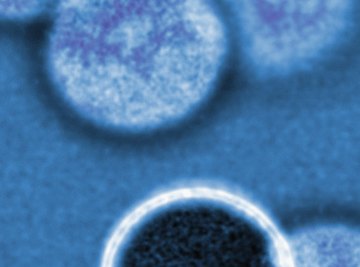
The main difference between animal cells and plant cells is the latter has a strong exterior cell wall and a large vacuole. The strong cell wall lets the plant store water. When choosing materials to complete a plant cell project, determine how to show the outer cell wall. Most of the materials to make a plant cell are readily available in the kitchen pantry. If you prefer a non-perishable plant cell, build the plant cell model using household items.
The Cell Wall
Make plant cell walls using an oblong cookie sheet or even a 9-by-13-inch casserole dish. Other items to use to represent the cell wall include the lid to a shoe box or rectangular picture frame. A large shirt box, from a department store, also works as the exterior of the plant cell wall. For edible plant cells, use a sheet cake, a large pan of brownies or even a very large cookie.
Edible Plant Cell Model
The cytoplasm in a plant cell must be clear so that the other components are visible. Clear or flavored gelatin sets up to hold the other components in place. Choose a gelatin flavor that is translucent, such as pineapple or lemon. Define the cell membrane with string licorice or ribbon fruit rolls. Represent the nucleus with half an orange or tomato. A grape works well for the nucleolus. Use a cross section of cabbage or lettuce to show the unusual shape of the Golgi apparatus. Create the large vacuole out of a piece of bread. Use ribbon candy and other small candy pieces for the various chloroplasts and mitochondria. Cookie sprinkles or cracked pepper resemble the ribosomes. This gelatin technique can also be used to make a 3D animal cell model.
Non-Edible Plant Cell Model
Cut the various parts of the plant cell out of construction paper, using the colors to coordinate with the cell parts. If you prefer to use a variety of items from around the house, start with a section of Styrofoam to represent the cytoplasm. A tennis ball or other small ball represents the nucleus. If you must show the interior of the nucleus, cut the tennis ball in half and use a large marble to represent the nucleolus. Cut and fold corrugated cardboard to show the Golgi apparatus. Use play sand for the ribosomes. Ribbon and lace, zigzagged across the Styrofoam cytoplasm, represents the endoplasmic reticulum; ribbon for the smooth and lace for the rough. Use beads and buttons for the amyloplasts and chloroplasts.
Creative Representation
You may want to create a unique plant cell model that you and your classmates can enjoy after grading. Create the plant cell model with cupcakes. Fill a pan or box with cupcakes. Ice them to form one smooth surface. Remove one cupcake and substitute an apple for the nucleus. Surround the cupcakes with a membrane made from fruit ribbons. For each item in the plant cell, remove a cupcake and replace with another edible treat. You can hollow out a cupcake, instead of removing it, and fill the hole with licorice strings to show the centrosome or the microtubules. Use jellybeans for the vesicles and lysosome.
References
About the Author
Julie Richards is a freelance writer from Ohio. She has been writing poetry and short stories for over 30 years, and published a variety of e-books and articles on gardening, small business and farming. She is currently enrolled at Kent State University completing her bachelor's degree in English.
Photo Credits
Chad Baker/Photodisc/Getty Images