



So you pull the car into the garage and a slithery yellow-tan snake is sitting on the concrete step into the house. Can you tell at a glance if the snake is venomous or just an unwelcome intruder? A lot of people would say that any snake is a bad snake, but the fact of the matter is that garter snakes and other so-called harmless snakes are great for maintaining a pest-free environment. Since they feed on mice and other small rodents, a snake in the yard can mean a healthier environment inside--if you are sure that the snake is not venomous.

Get informed. Find out if there are venomous snakes native to your region. Listen to local folklore, but don't take it as gospel. For example, local legend in southern Illinois is that the rattlesnakes don't come any farther north than Bald Knob Cross. But hikers who see the little critters come out of their nests each year at Little Grand Canyon, about 10 miles north of the Cross, would definitely disagree. Still, knowing the basic environment a snake prefers can keep you for from swimming with cottonmouths or hiking in a canyon full of baby rattlers.
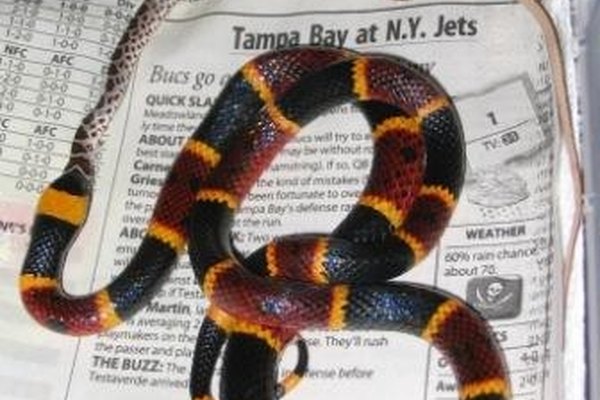
Pay attention to the snake's coloring. Several types of snakes look very similar except for minor differences in their coloring. People who live in the Eastern Gulf regions can tell you there is a world of difference between red, yellow, and black snakes. A scarlet king snake, basically harmless, is mostly red with smaller bands of black and yellow. The snake is red, then black then yellow, then black and then red again. An eastern coral snake, which is very venomous, is black with a thin stripe of yellow and then a red section then a thin stripe of yellow and back to black again. Basically, if the red touches the black, its a king snake. If the red and black are divided by a yellow stripe, call the exterminator.
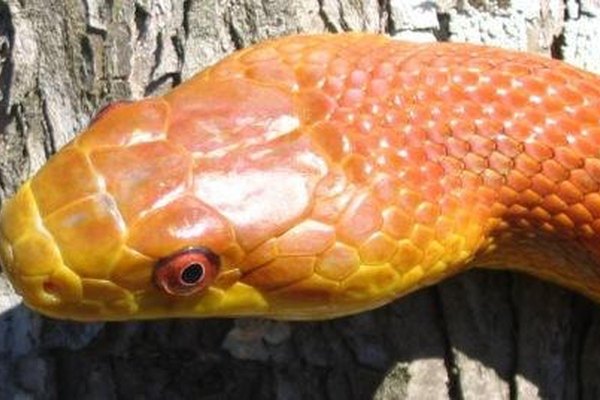
Watch the head. Some people will claim that the head of a poisonous snake is more arrowhead shaped than the more blunt head of a non-venomous snake. Imagine trying to determine how much a snake's head looks like an arrowhead while feeling panicked and full of adrenaline. Mostly, this is a classification system that should be used for identifying the type of snake later and with someone who is well-trained.
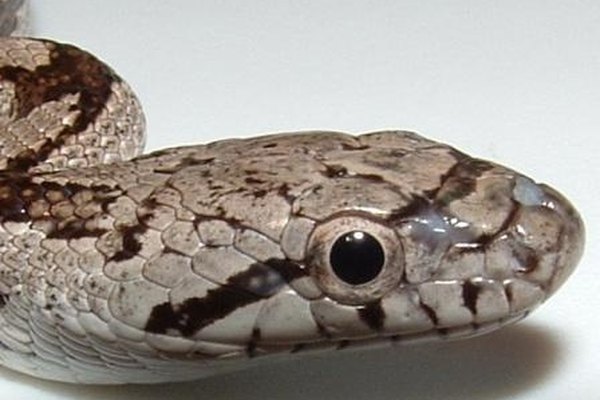
Check its eyes. All the poisonous snakes of North America have cat's eyes. If you look at the eye and it has the sort of round-diamond pupils of your friendly neighborhood cat, call the exterminator. Okay, so maybe you don't want to get close enough to look into the snake's eyes, but absent a telltale rattle, it is the single best and most consistent way to tell if a snake is poisonous.
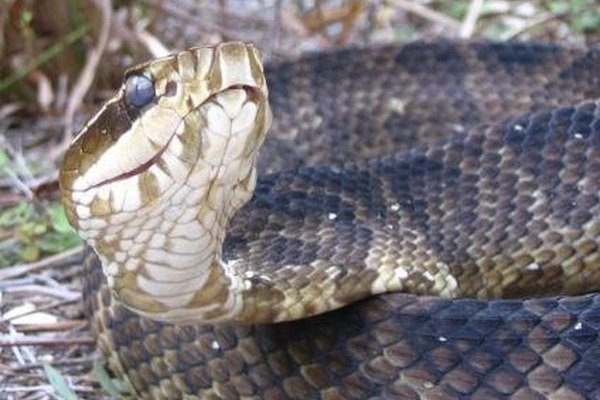
Avoid the problem. Any unfamiliar snake may bite and cause problems humans and pets. Whether they carry a venom that causes a reaction in humans or not, snakes have fangs that can cause large amounts of ripping and tearing damage as they bite. The safest bet is to just avoid the unfamiliar snake, take a picture and let your local wildlife officials decide what needs to be done about it.
Writer Bio
Lucinda Gunnin began writing in 1988 for the “Milford Times." Her work has appeared in “Illinois Issues” and dozens more newspapers, magazines and online outlets. Gunnin holds a Bachelor of Arts in English and political science from Adams State College and a Master of Arts in public affairs reporting from the University of Illinois at Springfield.
Image Credit
flicker.com, snakeeducation.com