Things You'll Need
Shoebox
Small cage or laundry basket
Heating pad
Plastic, newspaper or paper towels
Twigs
2 or 3 shallow dishes
Rocks
Eyedropper
Commercial baby bird food
Insects, nuts, fruits, alfalfa sprouts and/or sunflower seeds
Spray bottle
Bird feeder
Bird seed
Spotting a baby tree swallow on the ground, unable to fly, may bring out your inner animal rescuer. Uninjured baby birds with feathers, called fledglings, should be left alone because one or both parent birds are most likely nearby. Baby birds without feathers can be returned to the nest, if you’re able to find it. Observe the area from a distance; if the parent birds do not return within an hour, the baby tree swallow needs your help.
Contact the closest wildlife rehabilitation center. Orphaned birds have the greatest chance of survival if cared for at one of these facilities. If there is no wildlife rehabilitation center nearby, you may hand raise the baby tree swallow.
Wash your hands before and after caring for the baby tree swallow.
Provide adequate housing for the baby bird. If it is a hatchling (no feathers and closed eyes), use a small box with a light cover. Maintain temperatures of 85 to 90 degrees Fahrenheit by lining the bottom of the box with a heating pad set on low. If it is a fledgling (has feathers and open eyes), use a small bird cage with a nest area. Use a small laundry basket if no cage is available. Line the bottom with plastic, newspaper or paper towels. Provide twigs for perching.
Change the cage lining layers several times a day.
Provide a small, shallow dish of fresh, clean water. Add rocks to the dish to prevent drowning.
Feed hatchlings commercial baby bird fool prepared according to the manufacturer’s directions. Use an eyedropper to place the food in the back of the baby bird’s mouth, past the windpipe. Feed hatchlings every 20 minutes from morning until night. Feed fledglings a mix of baby bird food, insects, wheat bread, mealworms, nuts, chopped apples, alfalfa sprouts and sunflower seeds. Feed fledglings every 30 minutes, gradually increasing the time between feedings to two hours.
Encourage the baby tree swallow to self-feed after 10 days of feeding every two hours. Use tweezers to feed solid foods, showing the bird the dish the foods come from. Leave the dish of food in the cage and watch to see if the bird eats from the dish. The bird should be self-feeding by 4 weeks of age.
Mist the baby tree swallow with a spray bottle twice a day. Provide a shallow dish of water for bathing.
Release the baby tree swallow once it is able to fly and consistently self-feed. Provide an outdoor bird feeder.
Tips
To mimic care received in the wild, offer a variety of food, keep the cage clean and feed consistently. Daily access to sunshine is important, but be careful the baby bird does not overheat. Do not allow pets or children to stress the baby bird.
References
Photo Credits
-
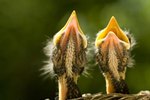
Pair of Baby Tree Swallows (tachycineta bicolor) image by Steve Byland from Fotolia.com