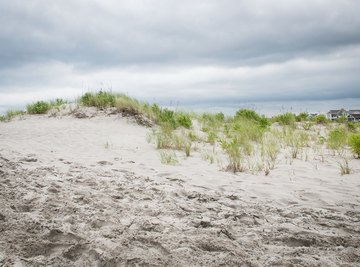

A sand dune is a hill of loose sand built by wind processes also known as eolian processes. Sand dunes are found in deserts and coastlines around the world. The science behind forming sand dunes involves two elements: sand and wind. Wind provides energy strong enough to move the grains of loose sand. An item of obstruction used as a stabilizer such as a tree, a large rock or shrubs often stop the sand from a continuous blowing motion and the sand begins to pile up to form dunes. This can be demonstrated in a simple sand dune project.
- 1 cup of dry play sand
- Shallow container such as baking pan or shoe box
- Drinking straw
- Rock or other object with flat bottom
Straws with larger openings or several children blowing on the sand at the same time will speed up the process.
For a variation, use different sized granules such as sugar, salt, sea salt, dried mashed potatoes and watch what effect it has on the peaks when the wind hits them.
Remove straw from mouth before inhaling so sand is not ingested.
If sand gets in your eyes, immediately flush with water

Prepare the work area by covering a table with plastic table cloth or newspapers.
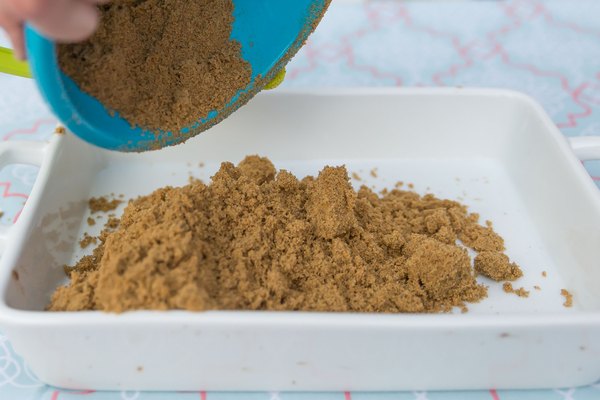
Pour play sand into a shallow container such as a baking pan or shallow shoe box. A 9-by-11-inch container that is at least 2 inches deep works well. A shoe box with a lid is a good choice for a classroom presentation because it is easy to transport.
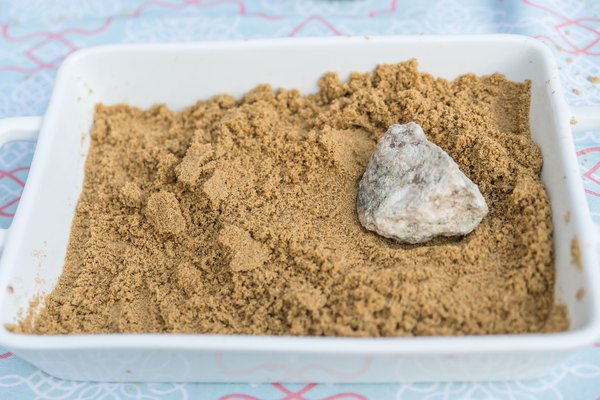
Push away an area in the center of the container to make room for the rock. Place a rock or other object with a flat bottom inside container. An object that measures no more than 1 inch tall works well to create a solid stabilizing point for the sand.
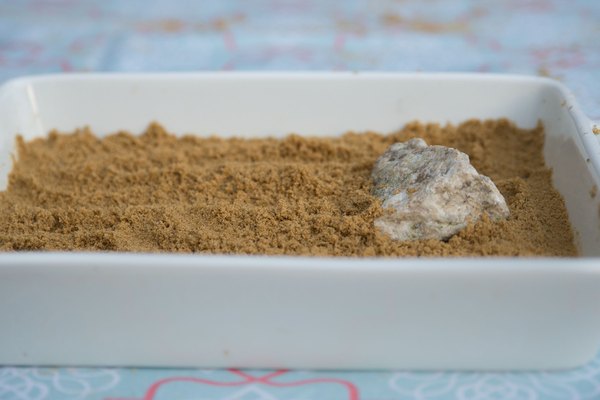
Shake the container gently until the surface of the sand is smooth and flat using care not to shift the rock out of place. Set the container on a flat surface and hold the rock in place as you gently tap the sides of the container.
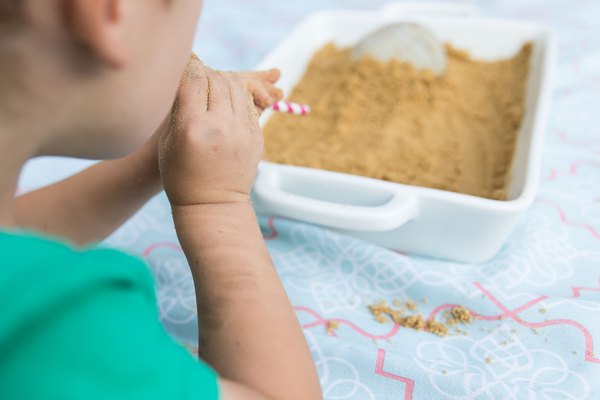
Blow gently through the drinking straw to move the sand toward one side of the rock. Depending on the amount of air provided in each breath, it will take several breaths to move the entire cup of sand to form a dune. Keep the straw just above the surface of the sand and make long soft blows through the straw.

Remove the straw from your mouth before each additional breath to avoid sand getting into your mouth or airways and to prevent too much saliva from building up inside the straw. If the sand becomes wet, it will not easily move. As you continue to blow, a sand dune will form on one side of the rock.
Things You'll Need
Tips
Warnings
References
Tips
- Straws with larger openings or several children blowing on the sand at the same time will speed up the process.
- For a variation, use different sized granules such as sugar, salt, sea salt, dried mashed potatoes and watch what effect it has on the peaks when the wind hits them.
Warnings
- Remove straw from mouth before inhaling so sand is not ingested.
- If sand gets in your eyes, immediately flush with water
About the Author
Tere Scott began freelance writing in 2009 but has written professionally since 1991 after coordinating specification sheets for Vestal Laboratories (now Merck) and overseeing and creating promotional marketing documents for Weinacht & Associates. She has also authored a children's book about loss and grief. Scott earned a Bachelor of Science from Lindenwood University. Her passion for children led her to write educational blogs.
Photo Credits
Anne Dale/Demand Media