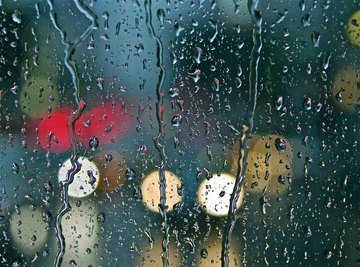
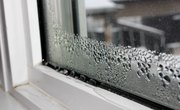
Life depends on the water cycle, which includes condensation, evaporation and precipitation. Without condensation, there would be no clouds, or the rain, snow and hail they produce. Condensation is what happens when water vapor changes from a gaseous to a liquid state. As warm air cools, the molecules in the water vapor move closer together, and the vapor becomes liquid. In the opposite process, evaporation, water molecules separate and move apart, turning liquid water back into gaseous form.
Cloud Formation
Clouds are a large-scale example of condensation, and generally form when water vapor in warm air rises to meet cold air higher in the atmosphere. As the warm air cools and the molecules coalesce and stick together, drops of water or ice crystals form and surround dust particles in the air. Clouds are billions of these water-coated dust particles swirling together.
The Water Cycle
Clouds are part of the water cycle that makes life on earth possible. When clouds become saturated with water droplets or ice crystals, and cannot hold them anymore, the excess water comes down as precipitation -- rain or snow. Rain and snow soak into the earth and drain into rivers and streams, and fill our reservoirs. Water on the ground also evaporates, turning back into water vapor, to rise in the air and form more clouds.
Dew Point and Relative Humidity
The dew point is one measure of humidity, or how much water vapor the air contains at any given time. Relative humidity measures how much water vapor is in the air against how much water vapor the air can contain at the temperature during the measurement. Warmer air can hold more water than cooler air can. When the air temperature drops to the dew point, it becomes saturated, and some water condenses onto the earth, as dew or as fog. If the temperature is cold enough the dew freezes, and you've got frost.
Going From Warm To Cold
When steam from the shower covers the mirror, and your glasses get foggy near the pot of boiling pasta, that's condensation. When the outside of your car windshield fogs up on a cold day, the same process is at work as when you pour iced tea into a glass on a hot day, and the outside of the glass starts getting wet, or when you see your breath on a very cold day. Air conditioners and dehumidifiers come in handy on hot, steamy days to keep saturated water vapor from cooling and condensing on cool pipes, toilet tanks and concrete blocks in the basement foundation.
References
About the Author
Kathy Kattenburg has been a writer for more than 30 years. Her articles have been published in "N.J. Jewish News" and "Suburban Essex," and she is a contributing writer and full partner at Not the Singularity. Kattenburg has a BA in English literature from Drew University in Madison, New Jersey.