

Humminbird is a manufacturer of depth finders and fish finders sold under the same name. These devices help determine what the river or lake bottom looks like, where cover and structure is present and even display where fish are located. Dealers will usually offer installation but boat owners who have the time often elect to perform installations themselves.
Items you will need
Mounting brackets and screws (supplied by manufacturer)
Wire (supplied by manufacturer)
Cordless drill
Set of drill bits
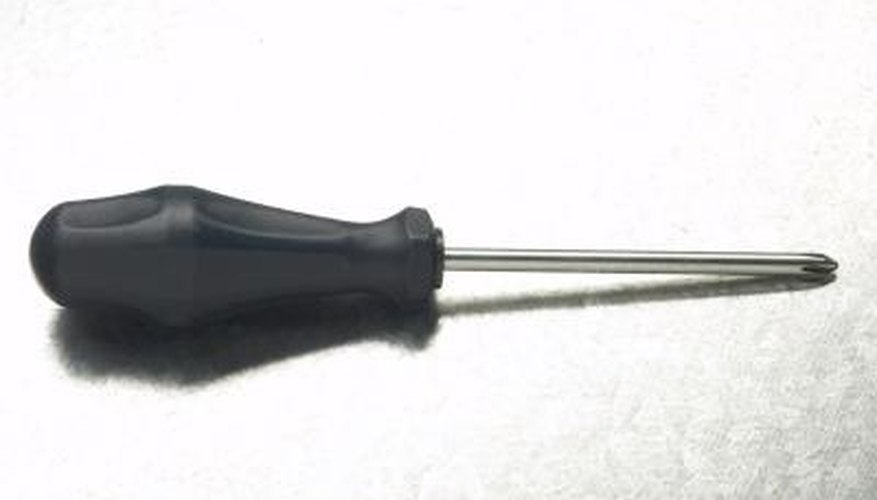
Screwdriver (standard and Phillips head)
Silicone caulk
Step 01
Select a location for the fish finder display unit. Choose a spot that allows the display to be seen from where you normally fish, such as near the bow where the trolling motors is located. Brackets often allow the display unit to be swiveled. If so, select a spot that allows the display to also be read from the pilot's seat.
Step 11
Drill holes for the mounting bracket using the drill bit size recommended by Humminbird. Attach the bracket with screws provided by the manufacturer. A Phillips head screwdriver will drive in mounting screws.
Step 21
Connect feed wires to the terminals on the back of the display unit. Consult the fish finder manual for more details. Usually, two wires are inserted onto color-coded terminals.
Step 31
Extend the "hot" wire to the battery, but don't attach the wire lead to the battery. Connecting to the battery occurs after installation is complete. Attach the ground wire to the grounding plate.
Step 41
Tuck wires into the gunwale or under padding to conceal them.
Step 51
Hold the transducer against a mounting spot on the transom. Make certain the transducer, when mounted, will not interfere with any of the boat's moving parts. Pre-drill mounting holes and make sure the transducer is pointing directly down. Screw the transducer into place.
Step 61
Run the sending wire from the transducer to the display unit and conceal it along the gunwale or side of the boat.
Step 71
Examine screws that might be at or below the waterline and apply silicone caulk to screw heads to waterproof them.
Step 81
Attach the "hot" wire to the battery. Check the display to make certain the power is on and the unit is showing data.
References
Writer Bio
Robert Korpella has been writing professionally since 2000. He is a certified Master Naturalist, regularly monitors stream water quality and is the editor of freshare.net, a site exploring the Ozarks outdoors. Korpella's work has appeared in a variety of publications. He holds a bachelor's degree from the University of Arkansas.