How to Paint Duck Decoys

How to Paint Duck Decoys thumbnail
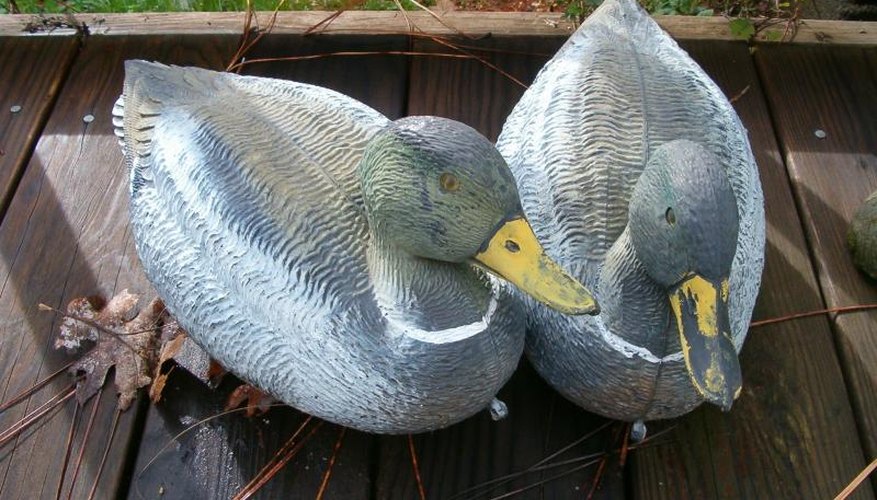
A painted duck decoy takes up to three weeks to cure before it can hit the water.

Painting a duck decoy takes patience to paint the details on the decoy and allow the paint to cure. Allow at least three weeks for the entire process. If you rush your work, you will end up repainting the decoy.

Things You'll Need

  • Foam or plastic decoy
  • Degreaser
  • Scrap cloth
  • Plastic scrubbing pad (3M Scotch Brite or similar) or 60 grit sandpaper
  • Wire brush
  • Paint - high-quality flat exterior latex paint (Behr Premium Plus or similar) and Krylon matte finish 1311
Show More

Instructions

    • 1

      Clean your foam or plastic decoy with a scrap cloth and degreaser such as Simple Green. If you are repainting a foam or plastic decoy, use a wire scrubber to loosen any paint or dirt before cleaning.

    • 2

      Take a plastic scrubbing pad or 60 grit sandpaper and scuff the decoy. This will help the paint to adhere to the decoy.

    • 3

      Select a paint pattern for your decoy. Takeem.com or duckhuntingchat.com offer instructions on how to paint a variety of ducks. Also, Anthony Hillman, at the website Hillmanart.com, has written many books on how to accurately paint duck decoys that include detailed instructions on how to paint different types of ducks.

    • 4

      Paint your decoy using a high-quality exterior latex paint. Wait at least two weeks for the paint to cure before applying the finish.

    • 5

      Apply two or three coats of Krylon Matte Finish 1311. This will add a nice sheen to your decoy and protect it from the elements. Do not skip applying the finish or the new paint job will be vulnerable to water damage.

Tips & Warnings

  • Remember to hold the decoy by the keel to prevent the oil on your hands from contaminating the surface.

  • If you are painting your decoy because the manufacturer's paint is failing, there is probably a mold problem under the paint. Wipe the decoy with acetone to remove the old paint, being careful to follow the directions on the acetone completely.

Related Searches:

References

Resources

  • Photo Credit bufflehead duck decoy image by Julianna Olah from Fotolia.com

Comments

You May Also Like

  • How to Carve & Paint a Duck Decoy

    Carving and painting a duck decoy is an exercise combining wood carving, three-dimensional painting and a knowledge of duck anatomy and coloration....

  • How to Paint Ringneck Duck Decoys

    The ring-necked duck, or Aythya collaris, is a species of duck found across North America. These collared ducks can be found in...

  • How to Make Duck Decoys

    If you're an experienced duck hunter, you've probably bought and used thousands of dollars worth of equipment over the years. Camouflage clothing,...

  • How to Restore Old Duck Decoys

    Old duck decoys may have life left in them. Refurbish the old decoys using some tested methods for the bogus quackers. Most...

  • How to Paint Wood Duck Decoys

    Archaic-period Native Americans (from 6,000 B.C. to A.D. 1) used duck decoys made from tule reed to lure birds within reach of...

  • How to Paint Popular Duck Decoys

    Whether you use them for hunting or outdoor decoration, duck decoys will eventually fade after being left out in the sun and...

  • How to Repair Goose Decoys

    Rather than buying a new goose decoy, repair the one you have. A few cracks and pellet holes can be taken care...

  • How to Paint Goose Decoys

    Bird decoys are a North American folk art and were first fashioned by Native American hunters who used tule reeds to create...

  • How to Seal Duck Decoys

    Use oil based sealers on wooden duck decoys, especially if you've used an oil based paint on them. Linseed oil and marine...

  • How to Set Up Diver Duck Decoys

    Diving ducks -- pochards or scaups -- are a popular hunt for sportsmen who enjoy the game of hunting fast flying fowl....

  • How to Paint a Bluebill Decoy

    With the advent of acrylic paints, the job of painting decoys has been made faster and cleaner. Oil paints can take weeks...

  • How to Make Wooden Duck Decoys

    There are a number of things to consider when choosing your pattern, colors and wood for carving and painting a wooden duck...

  • Duck Decoy Tips

    Duck Decoy Tips. Hunters use duck calls, boats and blinds when hunting ducks. They also use duck decoys. Made out of wood,...

  • How to Carve Duck Decoys

    Carving is an enjoyable hobby intended for releasing creativity, as well as relaxing. Although there are scores of different carving knives, a...

  • How to Paint Fish Decoys

    Fish decoys are designed to lull fish into a false sense of security, making them easier to catch. Few fishermen use fish...

  • Instructions for Painting Decorative Mallard Drake Decoys

    Decorative duck decoys make for an outdoorsy addition to any home's décor. Unlike standard hunting decoys, which merely give the impression of...

  • How to Oil Paint Ducks

    Painting ducks in oil paint is part of a long artistic tradition. Ducks are the subject of many realist painters from the...

  • Duck Decoy Rigging Tips

    Duck Decoy Rigging Tips. When rigging your duck decoys, you want to consider the type of anchor and string you use, as...

  • How to Paint a Decoy Deer

    Deer decoys are used as hunting tools to draw deer within range. Other common animal decoys include duck, turkey and goose. Deer,...

Related Ads

Featured