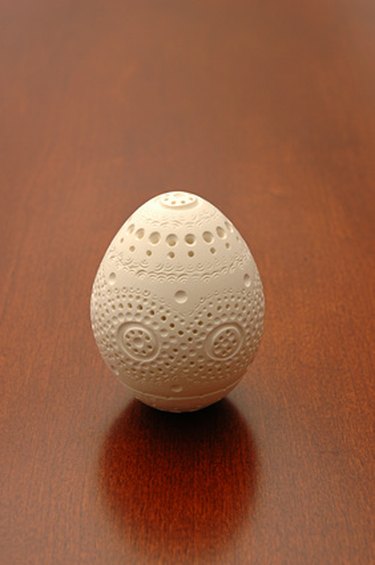
Instructions for Carving Emu Eggs

Instructions for Carving Emu Eggs thumbnail
Emu eggs have different colored layers to their shells.

Emu egg carving is an Australian aboriginal art that creates a connection with the animal kingdom and the land. These eggs have three distinctly colored layers. A green outer layer changes to teal and then to white. The layers create natural color changes and become part of the design as you carve the emu egg. Plan your design to incorporate these color changes to your best advantage.

Things You'll Need

  • Drill
  • 3/8-inch diamond tipped drill bit
  • Wooden skewer stick
  • Bowl
  • Bleach
  • Ear syringe
  • Dust mask
  • White glue
  • White pencil
  • Engraving tool
  • Razor blade knife
  • Triangle file
Show More

Instructions

    • 1

      Clean the eggs out and prepare them for use three to four months after they are laid.

    • 2

      Drill a 3/8-inch hole in one end of the egg with a diamond bit. Regular bits can create cracks that break while carving.

    • 3

      Poke into the egg with a wooden skewer to break the yolk.

    • 4

      Shake or blow the egg contents out into a bowl.

    • 5

      Mix a 25-percent bleach solution with water to remove the lining of the egg.

    • 6

      Use an ear syringe to inject this solution into the egg for a few minutes. This will remove the egg lining. Wear a mask to avoid the fumes.

    • 7

      Rinse the inside of the egg thoroughly. Do not allow any of the bleach solution to remain on the green outside shell or it will discolor it over time.

    • 8

      Mix a 50/50 solution of white glue and water to strengthen and coat the inside of the egg. Make several coatings of this mix on the inside of the egg.

    • 9

      Draw the design for your carving on the outside of the shell with a white pencil.

    • 10

      Carve the design with an engraving tool. Apply more pressure to reach the white inner layer and incorporate the color changes into your design.

    • 11

      Engrave from the outside of your design to the center.

    • 12

      Use a razor knife and triangular file to refine your design as you work. Keep pressure light to start all cuts.

    • 13

      Scrutinize your progress and color variations as you proceed and adjust your carving according to the design possibilities.

Tips & Warnings

  • Rest the emu egg on a gravel-filled sock to help hold it while you are carving.

  • Work under a lighted magnifying lamp to improve your precision cuts.

  • An air-powered dentist's drill can also be used for carving, or you can simply scratch away areas with hand tools.

  • Sandpaper and steel wool can also be employed to achieve different textures.

  • Using high-speed tools on emu shell creates fine dust and small particles. Keep this dust out of your lungs and eyes while carving. Wear eye goggles and a mask or plexiglass face shield. You may also want to wear ear plugs to protect yourself from the electric tool noise.

Related Searches:

References

  • Photo Credit black egg image by arkna from Fotolia.com

Comments

You May Also Like

  • How to Carve Shapes Into Emu Eggs

    Emu egg carving is an ancient tradition originating with the Aboriginal tribes of Australia. Because emu eggs have multiple layers of color,...

  • How to Decorate Emu Eggs

    The large, thick and naturally beautiful egg of the emu makes an excellent canvass for egg art. While many of the craft...

  • Precision Drilling Tools

    Use a high-speed air carving tool to drill through and carve decorative eggshells. artist eggshell image by robert mobley from Fotolia.com

  • Tools for Egg Carving

    Tools for Egg Carving. Egg carving is done in two ways: lacing and sculpting. Both ways start with the same first step---preparing...

  • Instructions to Make Wooden Knives

    Carving wood serves as a way to keep the hands strong and nimble. Carving a wooden knife makes a good project for...

  • How to Etch Emu Eggs

    One of the most popular forms of egg art is the etched emu egg. While other types of eggs can be etched,...

  • How to Tie an Egg Loop

    An egg loop also is known as a bait loop or bumper knot. Use it to tie a fishing line to a...

  • How to Carve Shapes Into Ostrich Eggs

    If you want to try your hand at a hobby where you are the artist that makes delicate little works of art,...

  • Carving Tools for Fruits and Vegetables

    Carving Tools for Fruits and Vegetables. In Thailand, carving vegetables is an essential part of the cuisine. A chef is not praised...

  • How to Market Emu Eggs

    A good breeding pair of emus can produce between 20 and 50 eggs per breeding season. Even if a rancher had only...

  • How to Etch Egg Shells

    Egg art is a craft for the patient and careful. An etched eggshell involves drawing on the surface, then cutting away layers...

  • How to Carve Egg Shells

    It is amazing that something as fragile as an empty egg shell can made into a beautiful piece of art. Carvings can...

  • How to Engrave Eggs

    A beautifully engraved, etched, or carved egg seems magical and enchanting. Using an electric rotary tool is the most common and practical...

  • How to Make Jewelry Boxes Out of Emu Eggs

    Sturdy, beautifully colored Emu eggs are often used to make jewelry boxes and other handcarved works of art. Their durability makes them...

  • Crafts With Emu Eggs

    Crafts With Emu Eggs. While bird eggs of many shapes and sizes are a common source for artistic inspiration, the egg of...

  • How to Carve Goose Eggs

    Carved goose eggs are beautiful and delicate. Many people have trouble believing that these carved eggs are the real thing, and ask...

  • How to Find Emu Eggs for Craft Projects

    The unique size, shape and color of emu eggs make them an interesting canvas for painting or carving or using in a...

  • How to Carve Basswood

    Basswood grows primarily in northern states and is used in making furniture, musical instruments, and craft projects. Basswood is ideal for machine...

  • What Can I Etch With Etching Cream?

    Etching cream is widely used to etch glass and sometimes crystal. It consists of a mixture of diluted chemicals which interact with...

Related Ads

Featured