

Material List for Stucco

Table of Contents
The materials you need for stucco vary depending on the size of the job and the surface on which you will be applying the stucco. Carefully measure the surface area to be stuccoed and plan for three layers of stucco, two base layers and a finish coat, each of about 3/8ths of an inch thick.
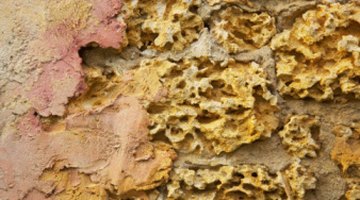
Remember to allow time for each layer to dry completely before applying the next.
Underlay
If you are applying stucco to brick or unpainted concrete, you will not need underlay. For wood frame or insulation board surfaces, cover the area with two layers of material. The first layer is building paper, which you will top with sheets of metal lath. These pieces give the stucco a surface on which to adhere.
Premixed Stucco
For small jobs like patching damaged stucco, you can purchase a premixed stucco. You will need to buy enough to complete two to three layers. This type of stucco is also suitable for larger jobs but it costs more than mixing your own.
Base Coat
For larger stucco jobs, it is more economical to mix your own. When you are mixing the base coat, make enough for two layers. The first is a scratch layer--etched with a scratching tool--that aids in the adhesion of the top layers. The base coat requires three parts of sand to two parts of Portland cement and one part of masonry cement. After combining these parts, add just enough water to the mixture that it holds its shape when you squeeze it in your hand.
Finish Coat
The finish coat is where you will add tint if you plan to color the stucco. To get the tint the correct shade, mix a few test batches to measure different amounts of color into the stucco and wait for it to dry to accurately gauge the finished product. In addition to tint, the finish coat requires one part lime to three parts of sand and six parts of cement. This coat requires a bit more moisture than the base coats, so you will add more water to have a more pliable finish coat.
Tools
Small patch jobs using premixed stucco merely require a stucco trowel for scooping and smoothing the mix onto the wall. For mixing your own stucco, you will need a large container suitable for mixing as well as a suitable mixer, like a long-handled hoe. In lieu of these, you can buy or rent a stucco mixer. You will need hammer and nails for affixing the building paper and metal lath to the wall and a scratch tool for "scratching" the first layer of stucco. To avoid purchasing a scratch tool, make your own by driving a row of nails through a 1-by-2 piece of wood the length of your choosing. Base and finish coats of stucco can be applied with a stucco trowel--like the one used for patching--or a stucco sprayer.
References
- "Complete Home Improvement"; Black & Decker; 2005
Writer Bio
Chance Woods has been a personal trainer since 2002, specializing in fitness and nutrition. She holds a Bachelor of Science in dietetics.
Photo Credits
- Jupiterimages/Photos.com/Getty Images
- Jupiterimages/Photos.com/Getty Images
More Articles

