
How to Travel to the Caribbean on an F1 Visa

How to Travel to the Caribbean on an F1 Visa thumbnail
Secure a Form I-20 from your university prior to your Caribbean travel.

The F1 visa is a foreign student visa issued to international students and scholars for undergraduate or graduate studies in a university in the United States. A visitor/tourist visa is valid for use by a foreign citizen primarily going to the United States for tourism, but also intending to take a short course for recreational study that is less than 18 hours per week. A course requiring school attendance for 18 hours or more per week requires a student visa. This also applies when attending seminars or conferences for credit towards a degree.

Things You'll Need

  • Passport with F1 visa stamp
  • Valid Form I-20
  • I-94 card
  • Supporting financial documentation (for those under post-completion of Optional Practical Training)
Show More

Instructions

    • 1

      Prepare your passport and make sure it has a valid F1 visa stamp to go in and out of the United States. According to the Western Hemisphere Travel Initiative, "all air travelers returning to the U.S. from the Caribbean are required to present their passports at U.S. Customs." Your passport must be valid for at least six months beyond the day of re-entry to U.S.

    • 2

      Secure a Form I-20 travel endorsement from your university. This is usually valid for a one-year period from the date it was signed. For anyone under post-completion optional practical training, the issued travel signature is only valid for a six-month period. Additional documents may also be required for presentation, including a letter from an employer confirming that you are employed or offered employment and supporting financial documentation.

      Travel in Canada, Mexico or the Caribbean with an expired F1 visa is possible through "Auto Revalidation." This may apply if the travel is for business or pleasure and the maximum stay is up to 30 days. Make sure you have a valid F1 status, an I-94 marked "Admitted F-1 until D/S" and have a recent travel signature on your I-20. These must be handled through your university's international students office or department.

      During your travel from the United States to the Caribbean, check your I-94 card prior to leaving the inspection area to ensure that it is properly notated with F1, D/S. Your card and passport will be readily returned to you, so you don't need to receive a new I-94 card upon re-entry to the United States. Otherwise, if the I-94 card is removed, you must get a new one with F1 notation first upon re-entry.

    • 3

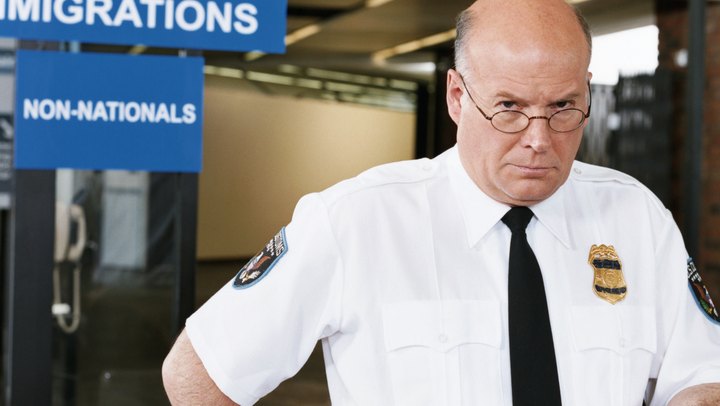
      Secure all your travel documents when returning from the Caribbean to the United States. Upon reaching the U.S. port of entry, show your passport and the rest of your prepared travel documents such as the Form I-20 and supporting financial documentation to the immigration inspector.

Tips & Warnings

  • For an F1 visa holder, it is always best to plan well in advance when traveling outside the United States. If intending to travel during school vacation, working on the requirements for processing by the university with little time may become a problem. The end of the semester can be a very busy time and processing your request for travel documents may take a longer time than expected.

Related Searches:

References

  • Photo Credit caribbean sunset image by Kevin Jernigan from Fotolia.com

Comments

You May Also Like

Related Ads

Featured