How to Grow Jalapenos from Seeds
Jalapeno peppers, while rating low on the Scoville heat index, pack enough heat to spice up salsa, sauces and a variety of Mexican entrees. Whether you prefer them raw, roasted, pickled, deep-fried or sauteed, jalapeno peppers are high in vitamins A and C, folic acid, fiber and potassium. Jalapeno peppers, although sensitive to the cold, grow well in the garden or containers and mature within 100 days of planting from seed, depending on the variety grown. Does this Spark an idea?
Things You'll Need
- Jalapeno seeds
- Potting mix
- Seed trays or individual pots
- Sturdy straws or bamboo skewers
- Plastic wrap
- 4-inch (or larger) pots for transplant
- Pitchfork
- Balanced, water-soluble fertilizer
- Organic compost
- Garden spade
- Water
- Mulch
Instructions
-
Starting Jalapeno Seeds Indoors
-
1
Start jalapeno seeds indoors at least six to eight weeks before temperatures for your location stay above 50 degrees Fahrenheit at night on a regular basis -- typically in late May to early June.
-
2
Fill seed trays or pots with slightly moistened potting mix. Redwood City Seed Company recommends using soil mixes such as Miracle Gro Organic Choice or Scott's Premium Potting Soil for best results.
-
-
3
Push seeds into the soil to a depth of 1/4 inch and cover with a 1/8-inch layer of soil, then water trays or pots lightly to set the seeds. If you use seed trays, plant one seed per cell. For clay or plastic pots, plant two to three seeds per pot spaced at least 1/2 inch apart.
-
4
Insert sturdy drinking straws or bamboo skewers into each of the four corners of a seed tray or in the center of pots, then cover with plastic wrap to help retain moisture and heat during germination. Keep the plastic covering on the trays until seeds sprout.
-
5
Place the pots in a location with partial to full sunlight and a constant temperature of 80 to 85 degrees Fahrenheit. Germination can take from 10 to 15 days under proper growing conditions.
-
6
Allow soil to dry between waterings, then use a spray bottle to gently mist seedlings from above. Alternately, place pots in a shallow pan and add 1 to 2 inches of water so that moisture is absorbed from the bottoms of the seedling containers.
-
7
Transplant jalapeno seedlings to larger containers when they have developed at least two sets of true leaves. At this time, thin out any weaker seedlings and keep the strongest specimens.
-
8
Loosen the soil from the tray or pot with a knife and gently lift it from the container, then place it into the transplant container filled at least halfway with slightly moistened potting mix.
-
9
Fill the transplant container with more potting mix, patting it around the seedling to eliminate any air pockets, then water to settle the plant into its new home.
-
10
Place repotted peppers in a location with full sun and warm temperatures until plants are fully established and ready for transplant to their permanent location in the spring.
Transplanting Jalapeno Seedlings
-
11
Prepare garden soil for pepper transplants by incorporating organic compost and a balanced, water-soluble fertilizer. Work amendments into the soil with a pitchfork at a depth of at least 8 to 10 inches.
-
12
Space seedlings at least 18 inches apart and allow at least 3 feet between rows.
-
13
Dig a hole deep enough so that the top of the seedling container sets even with the soil line.
-
14
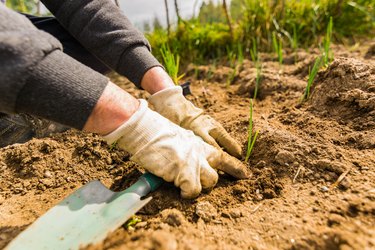
Remove the seedling from the container, gently loosen the roots and set it into the prepared hole. Fill in the hole with surrounding soil, packing it down around the base of the seedling, and water to set each plant in place.
-
15
Apply a 1- to 2-inch layer of mulch around the base of each plant to prevent weeds and retain moisture between waterings.
-
16
Keep soil moist but not saturated during the growing season. Give plants at least 1 inch of water per week, or twice per week during periods of drought. Watering from below will prevent fungal and bacterial diseases from attacking plants.
-
17
Apply balanced fertilizer, according to manufacturer's directions, after fruit sets on each plant. The Arizona Cooperative Extension recommends a dosage of 3 tbsp. per 10-foot row, applied along the side of each row.
-
1
Tips & Warnings
Jalapenos can be harvested when fruits reach 2 to 4 inches in length.
Too much fertilizer increases foliage and deters production of peppers.
Never touch your eyes after working with hot peppers (during harvest or preparation).
References
- University of Florida IFAS Extension: Florida Vegetable Gardening Guide
- University of Illinois Extension: Watch Your Garden Grow: Peppers
- Arizona Cooperative Extension: Peppers
- Texas AgriLife Extension Service: Producing, Preparing and Processing Jalapeño Peppers for Health
- Colorado State University Extension: Growing Peppers is Fun, Easy and Addicting
- Redwood City Seed Company: Pepper Growing Tips
Resources
- Photo Credit Jupiterimages/Photos.com/Getty Images