

How to Check If My Property Has Ever Flooded

Major floods cause expensive damage to the built environment. New foundations, floors, walls, electrical wiring and plumbing are just some of the costs associated with flood damage. Items typically damaged by major floods such as appliances and furniture are also expenses to consider.
Irreplaceable items such as heirlooms or old photographs are also potential casualties of floods. Investigate the existence and causes of past floods in order to prevent the cost and inconvenience of a flood on your property.
-
Consult the real estate paperwork. Read over all real estate documents pertaining to the condition of the property. Read disclosures from the previous owner as well as the inspections reports from inspectors you hired, if any.
-
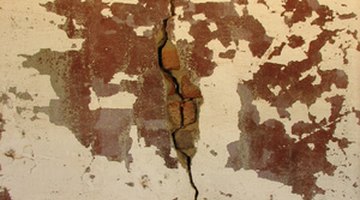
Check for cracks in the foundation. Heavy floods damage home foundations. Damaged foundations weaken the structural integrity of a building. MSN Real Estate suggests walking around the outside of the property and checking for cracks in the stone, concrete or brick that makes up the foundation.
-
Search for signs of water damage on basement walls. Look for tell-tale signs of water damage on the walls such as cracks, crumbling and mold. Use a flashlight to see into cracks and crevices.
-
Look for buckled floors. Look for warped, buckled or cracked floors. Floods ruin floors of all types including hardwood, concrete and linoleum.
-
Search for the smell of mold. A previous flood may have caused mold to form between the walls.
-
Ask the neighbors. Ask neighbors if they recall a broken water main or any other type of event that causes floods. Also inquire about seeing flood clean-up crews at your property during the previous owner’s residency.
Tip
Wide horizontal cracks in the foundation are the worst kind of cracks. If possible, ask the previous owner directly about floods.
Warning
New floors or a fresh coat of paint are sometimes used to hide flood damage.
References
Resources
Tips
- Wide horizontal cracks in the foundation are the worst kind of cracks.
- If possible, ask the previous owner directly about floods.
Warnings
- New floors or a fresh coat of paint are sometimes used to hide flood damage.
Writer Bio
Dee Striker has been writing professionally since 2007. Her work has appeared in "The New York Amsterdam News" and several online publications such as Clutch and Get 'Em Girls. Her portfolio includes articles on real estate, love/relationships and politics. She has a Bachelor of Arts degree in English and a Master of Arts degree in urban planning from the University of Michigan.
Photo Credits
- cracked wall image by Abrie Viljoen from Fotolia.com
- cracked wall image by Abrie Viljoen from Fotolia.com
More Articles

