A fresh coat of paint gives wood furniture a brand new look, but the type of paint you choose can make or break the project. The best paint depends on how you use the furniture and the type of finish or style you want to achieve. Proper preparation is also important in getting an attractive and durable finish.
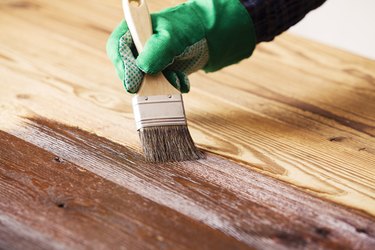
Unfinished Wood
Water-based latex paint with a gloss or semi-gloss sheen works best for furniture that gets a lot of use. It creates an easy-to-clean surface that holds up well. For purely decorative furniture, opt for latex paint with a flat finish.
Video of the Day
Video of the Day
Prepare unfinished or bare wood for paint by sanding with 60- or 80-grit sandpaper, following the direction of the wood grain. Vacuum the surface with a bristle brush attachment before wiping it down with a damp cloth or tack cloth to remove all sanding debris.
A stain-blocking primer on raw, unfinished wood, dark wood, knotty pine or oak wood gives you a good base for the paint. This primer coat prevents tannin bleeding, which happens when the oils in the wood bleed through the paint. If you plan on distressing and don't want primer showing through, cover just the knots with the primer. Then, avoid distressing over those areas.
Finished Wood
Woodworkers and professional painters often recommend an oil-based paint for heavily used furniture because of its long-lasting durability. One advantage of using oil-based paint on finished wood is that it sticks well to previously painted surfaces without primer. It even works on shellac.
But oil-based paint takes a lot longer to dry and cure than water-based paint. Oil-based paint is also more complicated to use. You need chemical solvents such as mineral spirits or turpentine to clean brushes, tools and surfaces. When using oil-based paints, work in a well-ventilated area, and wear a face mask for the fumes it emits.
A degreaser helps to remove dirt and oils on furniture that is already stained or painted. Sand and prime the surface using the same method as unfinished wood to ensure a smooth, even finish.
Pressed Wood
Furniture made from engineered pressed wood such as plywood and medium density fiberboard, known as MDF, is covered by thin wood veneers, plastic or paper laminates designed to look like wood. Sand laminate surfaces carefully to avoid exposing the material beneath. Veneers are very thin, sometimes as much as 1/16 of an inch or smaller.
The key to painting laminate furniture is to use an oil-based primer first. This type of primer bonds well to glossy surfaces and provides a foundation for the paint. Let the primer dry thoroughly according to the manufacturer's instructions, usually several hours or overnight. Sand the primed surface lightly before painting. Latex paint can be used over an oil-based primer.
Antique or Distressed Finishes
Milk paint and chalk paint give furniture an antique look to get distressed or shabby-chic finishes. You can apply both paints without primer, but it's a good idea to sand glossy surfaces first. Chalk paint sticks well and works directly on most painted or stained surfaces.
Milk paint takes a little more work. You need to add a bonding agent after mixing the paint with water unless you're going for a chipped, timeworn look. Although the formulas are different, milk paint and chalk paint both create a soft, matte finish.
Add a polycrylic topcoat to latex, chalk or milk painted furniture that receives heavy use. Polycrylic is water-based, making clean-up easy. It dries to a clear finish, unlike polyurethane which yellows over time.
Applying the Paint
Use high-quality paintbrushes when painting furniture to avoid brushstrokes or shedding. When working with latex paint, use a nylon or polyester angled bristle brush. Use a natural bristle brush with oil paint. A foam roller with rounded ends works best to cover large areas.
Always brush or roll with the wood grain to get the best results. Start with thin layers of paint. It's better to do several thin layers than just a few thick layers. The painted surfaces come out smooth and professional-looking.