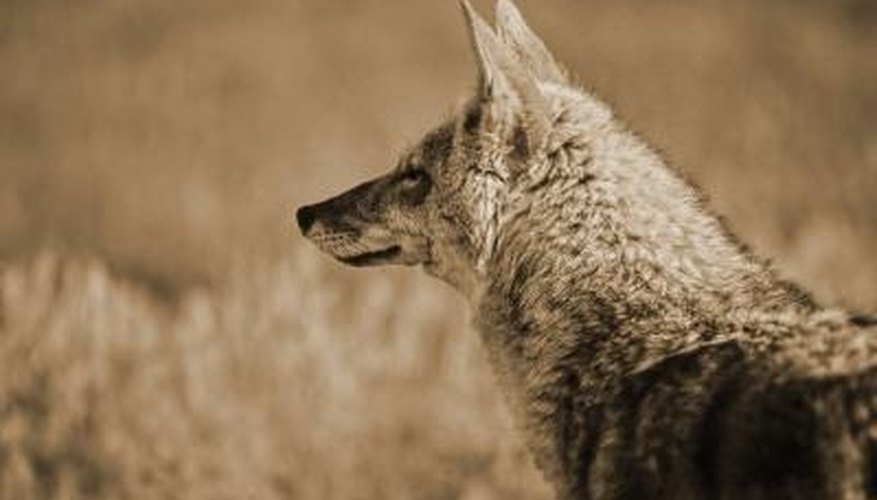


The conibear trap is a spring-loaded design with jaws triggered by a tripwire. The trap compresses the neck or body of the animal and causes a quick death. Conibear traps are effective for coyotes, but before using them, you must be aware of your state and locality's regulations regarding the use of conibear traps. The conibear is outlawed from land use in many states and is often considered a threat to domestic and protected animals. Catching coyotes in the the trap requires a strategic set and bait to attract the animal.
Items you will need
Conibear 220
Conibear set tool
Metal stake
Coyote urine
Varmint urine
Locate an area where coyotes are present. Look for tracks and scout the edges of treelines to locate the animals. Enter the trapping area during the middle of the day, when coyotes are least active, thus minimizing the effect of your presence on them.
Set the trap by compressing the springs with a conibear set tool. Hook the latch on the springs to hold them in a compressed position. Position the springs on each side of the trap, and unfold the trap to create a rectangular box shape. Pull the top rails of the box together to flatten the trap. Hook the dog (latch) on the top rails to set the trigger and engage the trap.
Dig an impression in the ground to match the dimensions of the trap. Set the trap in the impression, with the wire trigger slightly higher than ground level. Pound a metal stake through the end of the anchor chain with a rock.
Cover the trap with natural leaves and foliage. Use lightweight materials and work around the wire trigger to keep from triggering the trap. Make the area look undisturbed.
Sprinkle coyote urine on the edge of the trap, and add varmint urine to the area directly over the trap, thus making the trapped area resemble an area where another coyote has buried prey. Leave the trap for a couple days before checking it.
Warnings
- Only set the conibear trap in remote areas where no domestic pets are present. Conibear traps are extremely strong and will kill a domestic dog or cat. Also check your state's and locality's trapping regulations to ensure that your trap is legal. Illegal trapping is against the law; if you illegally trap, you will lose your hunting privileges and may be subject to criminal prosecution.
Tips
- Set the trap against a downed log or next to a large object. Setting the trap in a concealed area places the coyote in a comfort zone. Coyotes are skittish and may avoid a trap set in an open area.
References
Tips
- Set the trap against a downed log or next to a large object. Setting the trap in a concealed area places the coyote in a comfort zone. Coyotes are skittish and may avoid a trap set in an open area.
Warnings
- Only set the conibear trap in remote areas where no domestic pets are present. Conibear traps are extremely strong and will kill a domestic dog or cat. Also check your state's and locality's trapping regulations to ensure that your trap is legal. Illegal trapping is against the law; if you illegally trap, you will lose your hunting privileges and may be subject to criminal prosecution.
Writer Bio
Zach Lazzari is a freelance outdoor writer specializing in hunting, fly fishing and the general outdoors. He guided fly fishing trips for 10 years in Colorado, Alaska, Montana and Patagonia-Chile. Zach lives in Montana and splits time between the river and keyboard.