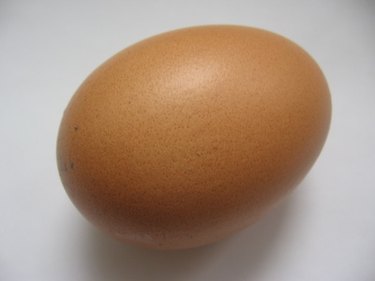
How to Preserve Egg Shells

How to Preserve Egg Shells thumbnail
To preserve an eggshell, the contents must be removed first.

Working with eggshells and preserving them requires emptying the contents without damaging the shell itself. The eggshells require cleaning and treating with heat to prevent rot or decay. Besides strengthening and preserving the outer shell and cleaning the inner shell out, filling the interior again with another substance makes the eggshell less fragile and easier to manipulate without cracking.

Things You'll Need

  • Sewing needle
  • Syringe
  • Cold water
  • Oven
  • Cookie sheet
  • Beeswax
  • Microwave
  • Stove
  • Sauce pan
  • Spoon
  • Egg carton
Show More

Instructions

    • 1

      Poke a small hole into the center of the large bottom part of an egg with a sewing needle. Insert the needle a few times to enlarge the hole to about half the diameter of a pencil eraser.

    • 2

      Fill a syringe with air by pulling the plunger back slowly. Insert the syringe needle into the hole in the bottom of the egg. Push the plunger into the syringe to force air into the shell and the egg's content out of the hole and into a bowl.

    • 3

      Remove the syringe needle and pull back on the plunger again to refill it with air. Place the needle back into the egg and continue to push the contents out until nothing is left to come out of the egg.

    • 4

      Fill the syringe with cold water and insert the syringe back into the shell again to fill it completely with the water. Cover the egg hole with your finger and gently shake the egg to help dislodge any remaining egg content. Force the water back out of the egg with the syringe air just as done before. Repeat this step an additional two times.

    • 5

      Heat an oven to 200 degrees Fahrenheit and place the egg, lying on a cookie sheet, in the oven for 15 minutes. This will dry out the inside of the egg completely, and help harden it slightly. Remove the shell and let it cool for about 10 minutes before touching it.

    • 6

      Melt one cup of beeswax in a microwave or saucepan on a medium high heat. Allow the beeswax to liquefy slowly, but not come to a boil, by stirring it occasionally. Adjust the heat as necessary or remove the wax from heat to control the melting speed.

    • 7

      Dip the syringe needle into the warm wax and pull back on the plunger. Fill the inside of the egg with the beeswax. Fill the syringe as many times as necessary to get the entire egg full.

    • 8

      Place the egg, hole side up, in an empty egg carton and let it cool completely. Within four hours the wax will harden enough to move the egg.

Tips & Warnings

  • Do multiple eggs at the same time and do all the eggs for each step before moving on to the next.

  • Do not place the wax-filled egg into the refrigerator to cool. Let it cool in the open air only.

Related Searches:

References

  • Photo Credit Egg image by Andrei Leczfalvi from Fotolia.com

Comments

You May Also Like

  • How to Preserve Eggshells

    Collecting eggs from various birds is a way to learn about science. By collecting and saving the eggs, you can compare the...

  • How to Preserve Duck Eggs

    Preserved duck eggs are a delicacy that originated in the East. The eggs are cured or preserved for a certain amount of...

  • How to Preserve Shells

    Children love to collect shells when they go to the beach. Parents can help their children clean and preserve these shells. The...

  • How to Make Eggshell Jewelry

    Eggshells have been decorated for centuries, from fabulous Faberge eggs adorned with gold and gemstones to folk-art eggs from Romania and Poland...

  • How to Preserve Eggs for Future Use

    For centuries people have struggled to find ways to preserve foods for long journey and to make them last longer. Refrigeration has...

  • How to Etch Egg Shells

    Egg art is a craft for the patient and careful. An etched eggshell involves drawing on the surface, then cutting away layers...

  • How to Lighten Dark Eggshell Enamel Paint

    Mistakes in choosing paint colors will happen. Color that seems ideal on the little paint chip or while it was in the...

  • How to Remove Egg Shells

    The egg is one of the most versatile foods in the land of culinary delight. It can be eaten alone in a...

  • How to Crack Only the Top of an Eggshell

    In using eggshells to make crafts, it is sometimes handy to make a clean break.

  • How to Feed Chickens Egg Shells

    Depending on her breed, a healthy, productive hen can potentially lay up to 300 eggs per year. Since each egg shell contains...

  • How to Drill a Hole in a Shell

    You can safely drill a hole in a shell without causing it to crack or break. Shells are prized for their beauty...

  • What to Do With Boiled Egg Shells

    Egg shells have many interesting uses, including applications in the yard and kitchen. They can even be used to treat problematic skin.

  • How to Recycle Eggshells

    In the same manner that we can recycle milk cartons, water bottles and soup cans, we can also recycle eggshells. Before you...

  • How to Drain Small Eggs Without Cracking the Shell

    Decorating eggs for Easter is a timeless tradition for many families, and parents often lament not being able to keep the creative...

  • How to Make an Igloo from an Eggshell

    This ehow was contributed to eHow anonymously by one of our guests. It makes a good winter project for elementary school children.

  • How to Boil a Quail Egg

    Quail eggs often are used in Asian cuisine, particularly Japanese, but they can be adapted to many recipes. Once they are hard-boiled,...

  • How to Make Jeweled Faberge Eggs

    The House of Faberge in Russia made lavishly decorated and jeweled eggs from 1885 until 1917. These Faberge eggs were covered with...

  • How to Carve Egg Shells

    It is amazing that something as fragile as an empty egg shell can made into a beautiful piece of art. Carvings can...

  • How to Preserve Heritage Turkey Hatching Eggs

    A heritage turkey is a domestically bred turkey that retains characteristics not typically found in birds raised by the large commercial farms....

  • How to Compost With Egg Shells

    Egg shells are 93 percent calcium carbonate, according to "Backwoods Home" magazine, and contain other elements like nitrogen that are beneficial to...

Related Ads

Featured