

How to Tell the Size of Wire

Wire sizes are called gauges. The gauge of a wire is determined by the diameter of the conductor cable that is wrapped within the insulated sleeve. Different gauge wires are used for different purposes, so knowing the gauge of your wire is very important.
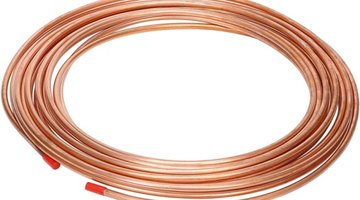
Things You Will Need
- Fabric measuring tape
- Wire strippers
A thinner gauge wire will carry an audio signal well but may not be thick enough to handle a large load of power. You can check the gauge of your wire with a simple fabric measuring tape.
-
Strip the insulation from around the wire using wire strippers if it is not already bare. The gauge of a wire is measured by the diameter of the conductor cable, not including the insulation.
-
Determine the diameter by wrapping the tape around the conductor wire. Record the measurement in millimeters.
-
Compare your measurement with a wire gauge sizing chart, such as the one found in the Resource section, to find the wire's gauge. For example, if your measurement is 1 mm, you have a 16-gauge wire.
References
- American Electricians' Handbook; Terrell Croft, Wilford Summers and Frederic Hartwell; 2008
Writer Bio
Jonathan Shaffer has been a freelance writer and blogger since 1999. He has written concert reviews for prominent music blogs and magazines, including "Connections Magazine" in Orlando, Fla. Shaffer holds an Associate of Science in the recording arts from Full Sail University and is working on a Bachelor of Business from Valencia College.
Photo Credits
- Zedcor Wholly Owned/PhotoObjects.net/Getty Images
- Zedcor Wholly Owned/PhotoObjects.net/Getty Images
More Articles

