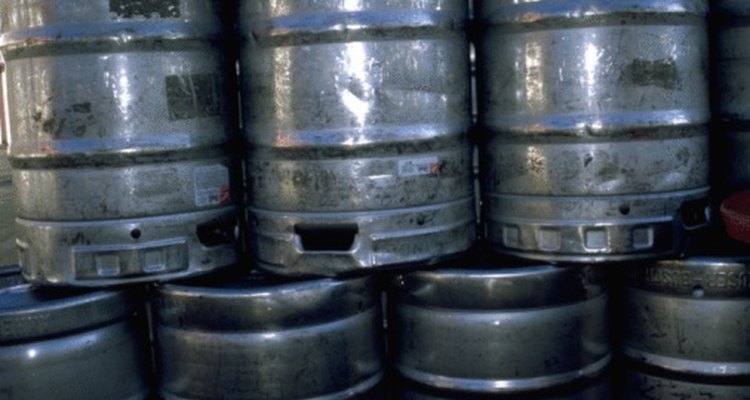
A kegerator is a draft beer system housed inside a refrigerator. The main parts of a kegerator include the refrigerator, beer keg, CO2 tank, regulator, shank, draft faucet, beer line and air hoses. The CO2 tank is a crucial piece of kegerator equipment, responsible for keeping beer fresh and carbonated for four to six months. Without it, your beer would only last A day or two and you'd need a hand pump to drain it from the keg. Your regulator gauge will warn you when your CO2 tank is empty. Several other signs may accompany the gauge reading.
Read the regulator gauge on your CO2 tank. Some regulators have two gauges -- one that shows the air pressure and one that shows how much air is left in the tank. Some regulators have only an air pressure gauge. All gauges will read zero when your CO2 tank is empty.
Look to see how fast your beer is flowing out of the draft faucet when you pour it. The beer will flow out of the faucet in an unusually slow manner when your CO2 tank is empty because the CO2 is responsible for pushing the beer out of the keg and into the faucet.
Drink the beer that comes out of your kegerator faucet. It will taste flat, lacking the usual fresh brewery flavor, when your CO2 tank is empty. CO2 maintains the carbonation of kegerator beer.
Check the head (foam) on the beer that you pour from your kegerator. A head with large, soapy-looking bubbles or foam that disappears quickly are signs of an empty CO2 tank.
Keep track of how many kegs of beer you use after you refill your CO2 tank. A five-pound tank of CO2 lasts for five to seven half kegs of beer. If you come close to this estimate and your kegerator is showing other signs mentioned above, your CO2 tank is empty or close to it.
Related Articles

How to Keep Kegs From Going Flat

Can I Re-Carbonate Soda?

How Long Can You Keep Beer Refrigerated?

How to Marinate Meat With a FoodSaver
How to Open a Corny Keg
Will Beer Freeze in the Freezer?

What Happens to the Alcohol ...

How to Calculate Alcohol Content in Wine

German Beer Vs. American Beer
How to Troubleshoot a Fog Machine
How to Cook Shrimp in Beer

Homemade Sweet Red Wine

How to Make Beer Not Taste Bitter

Is it Safe to Cook With Beer?

How to Use Caustic Soda to Clean a Beer ...

How to Pasteurize Homemade Wine
How to Use a ReliOn Humidifier
How to Start a charcoal fire without ...
How to Use the Norelco Jet Clean System

What Can You Put in Beer to Make It ...
References
Writer Bio
Based in Royal Oak, Mich., Christine Wheatley has been writing professionally since 2009. She contributes to several websites, specializing in articles about fitness, diet and parenting. Wheatley has a Bachelor of Arts in art from Calvin College.
Photo Credits
Jupiterimages/Photos.com/Getty Images