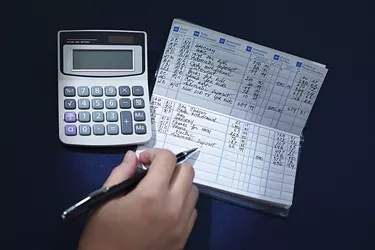
If you write a check without having enough money in your bank account to cover it, you typically will incur an overdraft charge. Banks that offer overdraft protection still will honor the check, but your account will show a negative balance. You can calculate the amount of the overdraft in advance if you know which charges will be hitting your account on a particular day. Many banks allow you to deposit additional funds the same day to avoid any overdraft fees.
Calculating the Overdraft
Video of the Day
Contact your bank or log in to your online banking account to find your current balance. Look on the back of your ATM or debit card to find the bank's customer service phone number if you prefer to access account information by phone. Subtract all of your pending charges from the current balance to find the amount of your upcoming overdraft. For example, if you have $100 in your bank account and write two checks that total $200, you will overdraft your account by $100.
Video of the Day
Adding Fees
Overdraft fees vary by bank, with most ranging between $20 and 40 per charge paid after your balance reaches zero. Some banks limit the number of overdrafts they will cover at one time so you do not get stuck with exorbitant fees. To continue the previous example, if the bank's overdraft fee is $35 per charge and you have two checks that clear, your total overdraft will be $170.