

How to Make Concrete Wall Toppers

When constructing a concrete wall system it is important to cap it, to keep water from penetrating into the wall. A concrete wall topper is also know as a cap stone. Most cap stones are made to direct the water away from the top surface of the concrete wall.
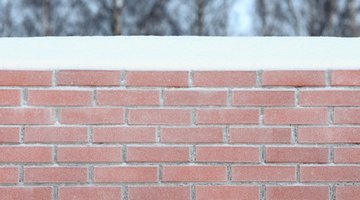
This prevents freezing conditions from causing the wall to freeze and break. The cap stone is the last component added to the wall system. The cap is made in a concrete form to fit the wall system.
Things You Will Need
- Tape measure
- Plywood
- Table saw or circular saw
- Miter saw
- 2-by-4 Lumber
- 2-by-6 Lumber
- Hammer
- Nails
- Glue
- Caulk
- Caulk gun
- Oil
- Bag of concrete
- Water
- Wood float
- Pointer trowel
- Concrete edger
Building a cap form
-
Measure the total width of your wall system. This includes the CMU (concrete masonry unit) block, and any stone or brick veneer.
-
Build a concrete form to hold the concrete for the cap. Cut a piece of plywood 4 1/2-inches wider than the thickness of the wall system. Cut it 19 1/2-inches long. Use a table saw and a miter saw for this step. This will make a concrete cap that will cover the length of a CMU block, and will overhang each side by 1/2-inch.
-
Cut two 2-by-4s that are 19 1/2-inches long. These will make the two sides of the concrete form for the cap.
-
Cut two 2-by-6 blocks that are 3-inches less than the width of the plywood base. Mark the center of the 2-by-6s in length. Mark the center of the block at 4-inches. This will be the location of the high point of the concrete form. Measure and mark both ends of the blocks at 3 1/2-inch. Draw a straight line from the 4-inch center to the 3 1/2-inch center on each side of the block. Cut the block along this line. These are the end blocks for the concrete form.
-
Nail the form work together. Use glue to help hold this together.
-
Caulk the interior seams with a silicon caulk. Use a damp finger to smooth the caulk joint. This makes it easier for the concrete to come out of the form after it has dried. Let the caulk dry before proceeding.
-
Apply oil to the inside of the form. The oil acts as a release agent letting the concrete come out of the form after it has set. You can use a oil that comes in a spray can for this step.
-
Mix a bag of concrete and pour it into the form. Use the end of a wood float to work the concrete into the form making sure there are no air pockets in the concrete. Use a 2-foot piece of 2-by-4 lumber to work back and forth across the concrete form to level the top of the concrete.
-
Smooth the top of the concrete with a wood float. Cut the perimeter of the concrete around the form with a pointed trowel to help separate the concrete from the form. Use a edger tool to round over all of the edges of the concrete. Let the concrete set for a few hours and then carefully flip the form over on soft grass to release the concrete cap.
Tip
Make multiple forms to speed the process. Add concrete dye to the bag of concrete as you mix to add a decorative color to your cap.
Warning
Wear gloves, dust mask and safety glasses as you work with the concrete.
The Drip Cap
- When constructing a concrete wall system it is important to cap it, to keep water from penetrating into the wall.
- The cap is made in a concrete form to fit the wall system.
- Cut a piece of plywood 4 1/2-inches wider than the thickness of the wall system.
- Use a damp finger to smooth the caulk joint.
- Let the caulk dry before proceeding.
- Apply oil to the inside of the form.
- Use the end of a wood float to work the concrete into the form making sure there are no air pockets in the concrete.
- Smooth the top of the concrete with a wood float.
References
Writer Bio
Jim Wildman served in the United States Marine Corps as a Communication Chief for 10 years. After his tour of duty in Desert Storm he attended Oklahoma State University receiving his Bachelor of Architecture. He worked as an architect for 10 years before starting his own design/build company. He began writing in 2009 for Demand Studios and published on eHow.
Photo Credits
- Hoarfrost on a wall. image by Vladimir Kolobov from Fotolia.com
- Hoarfrost on a wall. image by Vladimir Kolobov from Fotolia.com
More Articles

