


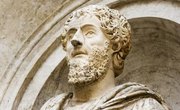
When people hear the term philosopher, they often imagine the philosophers of ancient Greece with long white beards dressed in flowing robes all sitting around contemplating the meaning of life. While it's true that philosophers do contemplate the meaning of existence, they are deep thinkers on many issues that continue to fuel the desire for knowledge and the quest for truth.
Types of Philosophical Inquiry
In order to understand what a philosopher is, it's important to understand a bit about what philosophers study. There are several branches of philosophy, including metaphysics, logic, ethics and much more, but generally philosophy is the study of matters concerning existence. For example, ethics deals with moral dilemmas, whereas logic examines thinking patterns. Metaphysics ponders the natural world and our relationship to the world and universe in which we live. A philosopher may focus mainly on one branch of philosophy or many aspects of the discipline.
Interests of Philosphers
A philosopher seeks truth in regard to the issues of existence and those conditions that affect humanity. The philosopher attempts to answer previously unanswerable questions through debate and arguments based on logical thought. A philosopher may also be referred to as a deep thinker who is on a quest to know how, when, where and mostly why. A philosopher takes established views and challenges them while appealing to logic and reason. Philosophers often have a strong interest in religion and science. Philosophers may share their ideas through writing, teaching, research and clerical careers.
Evolving Philosophical Debates
Ancient philosophers debated the state of the universe, life's purpose, existence and the political system as well as other subjects concerning humanity and the nature of life. Times changed and so did philosophy, but not entirely. Many of the topics of debate that were of importance to the philosophers of old remain just as important in modern philosophy. The only difference is that discoveries were made along the way that have provided answers to some profound questions. But it seems that for every question answered, new ones emerge to keep the minds of philosophers ever occupied.
Ancient Philosophers
Philosophy flourished in ancient Greece. Aristotle wrote extensively about life, death, the soul, heaven, physics and politics. Aristotle lived from 384 to 322 B.C.E. Plato was another intellectual who wrote in dialogues detailing conversations between individuals engaged in passionate debates. Socrates didn't write down his intellectual philosophies but instead critically examined ideas through spirited questioning, known as the Socratic method. He was put to death chiefly because the authorities were uncomfortable with the fact that Socrates caused others to question their own beliefs.
Contemporary Philosophers
Although ancient Greece might be better known for great philosophers, other cultures also made important contributions. Chinese and other Asian civilizations became known for their schools of thought, such as Confucianism. Current day philosophical discussion also draws heavily from the ideas of contemporary philosophers such as John Rawls, Immanuel Kant, John Stuart Mills, Adam Smith and Karl Marx, to name just a few. Contemporary philosophers focus on ethics, morality, reason, rationality, justice and utilitarianism. Modern philosophers examine social issues, politics and economic systems from a critical lens.
Becoming a Philosopher
If you’re passionate about studying philosophy and enjoy contemplating the meaning of human existence, you may have what it takes to be a philosopher. Most philosophers work at colleges and universities in teaching and research positions. Becoming a college professor entails completing a Ph.D. in philosophy, which takes about five to seven years of study beyond a bachelor’s degree and completion of a dissertation. Competition for teaching jobs in philosophy and the humanities is keen.
Related Articles







References
Writer Bio
Darlene Zagata has been a professional writer since 2001, specializing in health, parenting and pet care. She is the author of two books and a contributing author to several anthologies. Zagata attended the Laurel Business Institute to study in the medical assistant/secretarial program. She earned her associate degree through the U.S. Career Institute.