
When learning about fire safety, a poster-making session can help kids remember the common-sense tips that might save their lives in an emergency situation. Whether you are planning posters for a classroom or for a family activity, choose design ideas that will be easy to execute for the ages and skill level of the children.
Facts about Fire
As part of a lesson about fire, you can have students create posters that list different facts about fire. Ask students to take what they learned from a class discussion and to perform their own research, then have them present their facts on a poster. If students are stuck, you might remind them of well-known facts: fire spreads quickly, smoke is just as dangerous as flames, and inhaling the hot air created by fire can cause serious lung damage. This type of poster project is a way of reinforcing basic fire facts. Have students illustrate each fact or find unique ways to present their list so that people walking by the poster can see and remember the information easily. Turn the poster session into a competition and educational exercise by challenging the class to find facts that their classmates did not know.
Fire Safety Tips
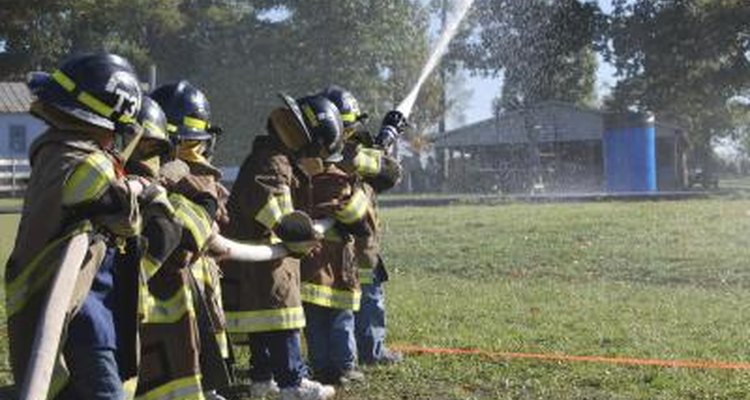
To help children remember what to do if they find themselves in a building that is on fire, suggest a poster about fire safety tips. You might have them focus on the time-sensitive nature of fire, for example, which makes it imperative to get out of a burning building as quickly as possible. Students can include ideas such as staying low to the ground when walking in a burning building and never going back into a place that is on fire. You can also include fire prevention tips such as testing smoke detectors, placing space heaters away from fabrics and items that might catch on fire, and paying attention to food that is on the stove or in the oven. For a class project, you can assign students one tip each and have them create a scene that shows the right and the wrong way to handle a potentially dangerous situation.
Family Fire Planning

For a family fire safety poster project, work on posters that explain how a family can plan for a fire emergency. You might have a child draw a map of the escape routes in the home, with all exits from each room labeled; kids can go so far as to label the primary and secondary exits or alternate routes. Family fire safety posters can list the meeting point for a family, show the "stop, drop, and roll" procedure, or show family members escaping safely from a room. Turn the poster-making session into a family discussion by talking about each safety route; you can also put the posters up around the home to reinforce the lesson.
Related Articles

Team Building Activities for Family ...

The Positive Effects of TV on the Family

What are Some Strategic Family Therapy ...

Things to Do in Boulder, Colorado

What California Beaches Have Fire Pits

Christian Team Building Games & ...

Fun Stuff to Do for Kids in the ...

How to Become a Foster Parent in ...

Cultural Assessment Tools

Examples of Family Involvement ...
Children's Activities for the Parable ...

Games for Family Communication

Youth Group Newsletter Ideas

How to Organize Community Service Events

How do I Cook With the Brinkmann Gas ...

Dutch Oven Cooking Schools
How to Cook With a Gas Tank
A List of Things to Find for an Outdoor ...

How to Plan Fun Activities for Kids

Fun Activities for Kids Who Are Dealing ...
References
Writer Bio
Elizabeth Smith has been a scientific and engineering writer since 2004. Her work has appeared in numerous journals, newspapers and corporate publications. A frequent traveler, she also has penned articles as a travel writer. Smith has a Bachelor of Arts in communications and writing from Michigan State University.
Photo Credits
Medioimages/Photodisc/Photodisc/Getty Images