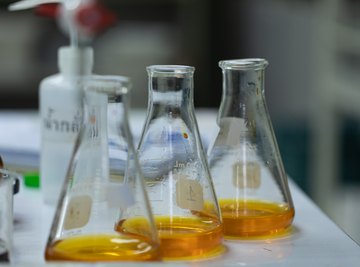

Titration is a laboratory technique used to find out the concentration of a particular material in an unidentified solution. The different methods used to do titration are categorized according to the reagent used and its reaction with the unknown solution. A regulated volume of a known reagent is added in the unknown solution and the result is concluded on the basis of the reactions such as electrical measurement or change in color. Titration is generally associated with school-level experiments but it has broad applications including health care, paint manufacturing, cosmetic industries, food industry, juice makers, manufacturing of cleaning material, mining corporations, water plants, dairy farms, wineries and much more.
Determining the pH Value
Industries that need to determine pH, such as the food industry, use the process of titration. Certain food items, for example, have a pH value that is not suitable for human use. Here, the titration is used to determine whether or not the pH value present in the food item is appropriate for human consumption.
Efficacy of Cleaning Products
The industry manufacturing cleaning products uses titration to determine whether or not cleansers remove bacteria from a surface. Through titration it is possible to identify which cleaning product has the level of acidity necessary to kill bacteria.
Testing Blood Sugar
Titration allows easy measurement of blood sugar levels. All you need is a portable blood sugar testing machine. These machines contain strips on which you put a drop of your blood. The reagents present on the strip mix with your blood and the resulting reaction shows the glucose level in your blood.
Testing for Pregnancy
The home pregnancy kit also uses level titration to provide results. Pregnancy tests work by detecting human chorionic gonadotropin. You need to put a few drops of your urine sample on the test strip. If you are pregnant, a positive result will appear in the indicator area as a color change in your urine. The titration results may also confirm other problems during the pregnancy such as vitamin D deficiency.
Testing Aquarium Water
The water of an aquarium needs to be properly balanced for the fish to survive. If the water is not balanced or if there is any change in the water properties, the fish can die. Water testing kits are available that use titration to check aquarium water for pH level, ammonia level, phosphates, nitrates and nitrites in the aquarium water. By adding a specific reagent to the water you may notice the change in color, which will reveal any changed properties of the aquarium water.