


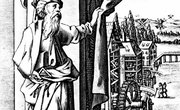
What is a Trebuchet?
A trebuchet is a machine used during medieval times to propel heavy objects vast distances. They were primarily used to bring down castle walls during a siege. The trebuchet is powered by gravity and centrifugal forces from two axes. This made it an intimidating battlefield weapon during the Middle Ages.
Design of a Trebuchet
A trebuchet consists of a long beam attached to a pivot rod on a heavy frame. The beam is fitted into a guide chute to make sure the beam moves in a straight line. There is a counterweight on one end of the beam and a sling attached to the other. A heavy object, usually a rock, is placed in the sling, which is then closed and secured to a release pin on the beam. Once the trebuchet is pointed toward the target, it is ready to fire.
Firing a Trebuchet
The counterweight is dropped, swinging the beam toward the target. The sling, with the rock in it, is whipped skyward and forward. When the counterweight hits the bottom, the beam stops moving. The sling keeps moving skyward and forward. It swings the rock forward on a second axis multiplying the centrifugal force. When the rock approaches the apex of arc, the release pin is triggered. This lets go of one end of the sling, allowing the rock to fly free.
Impact of a Trebuchet
The rock is now flying toward the target with tremendous force and speed. A typical medieval trebuchet could hurl a 300-lb rock 300 yards. A series of these projectiles could bring down even the most fortified castle walls and crush any soldiers in the way. Trebuchets were more accurate than other catapults of the Middle Ages. The projectile flies somewhat straight because the beam travels through a guide chute. If the position of the trebuchet and mass of the projectile remain constant, the point of impact can be predicted with reasonable accuracy.
Things Trebuchets Throw
In addition to heavy rocks, trebuchets were used to toss dead people and animals into castle grounds in an effort to spread disease. There are also stories of using decapitated enemy heads to reduce enemy morale and beehives to sting the opposition into submission. Flaming oil was also propelled by trebuchets to ignite wooden buildings within the castle grounds.
Related Articles


Writer Bio
Kent Ninomiya is a veteran journalist with over 23 years experience as a television news anchor, reporter and managing editor. He traveled to more than 100 countries on all seven continents, including Antarctica. Ninomiya holds a Bachelor of Arts in social sciences with emphasis in history, political science and mass communications from the University of California at Berkeley.