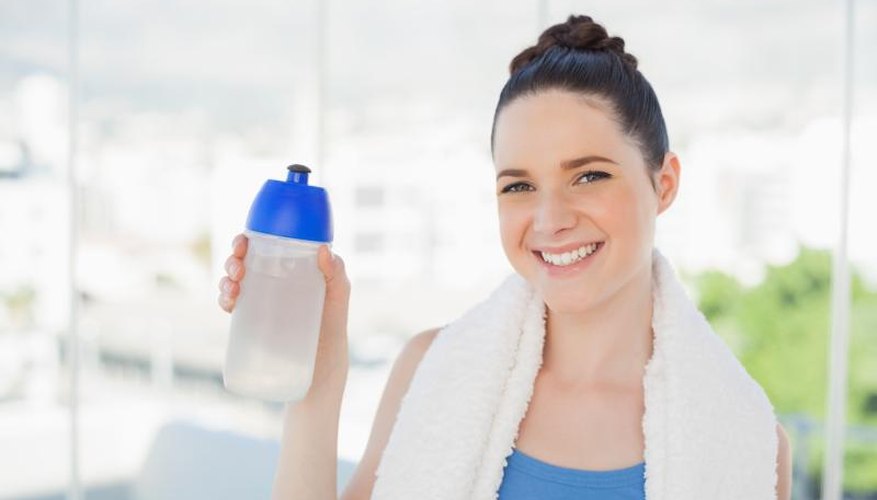



Physical activity in hot weather can lead to overheating and excessive sweating. Though not medically proved, placing towels that have been soaked in a mixture of aromatic ammonia and ice water around your neck may provide a respite from the heat. Spirit of ammonia, or aromatic ammonia as it is also called, is a respiratory and circulatory stimulant that is primarily used as a treatment for victims of fainting. When used on a cooling towel, the aromatic ammonia may help moderately reduce your body temperature.
Ammonia Towels
Mix 1 part aromatic ammonia and 4 parts cold water in a large basin. Add ice until the mixture is at a desired temperature. Place a clean hand towel in the basin and allow it to soak in the liquid for five to 10 minutes. Wring the towel out to remove the excess liquid and then wrap the towel around the base of your neck. Repeat the process when the cooling effect of the towel disperses.
Stay Hydrated
Though the towels may cool your body temperature, they will not replace fluid that has been lost through sweat. Always stay hydrated by drinking fluids before, during and after being physically active. Opt for a fluid that contains electrolytes – such as sodium, potassium and magnesium – if you have been sweating excessively. Check with your physician before exercising in hot or humid temperatures.
References
Writer Bio
Based on the west coast, Beth Rifkin specializes in business, food, cooking, family, lifestyle and health issues. Her work has appeared in numerous on and offline publications. Beth earned a Bachelor of Business Administration from Temple University.