How to Deadhead Dianthus Flowers

How to Deadhead Dianthus Flowers thumbnail
Bright, cheery dianthus flowers make a bold statement in the garden.

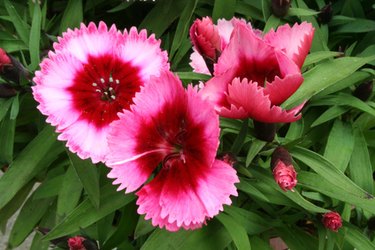
Dianthus's bright pink, red or lavender flowers with ruffled edges have been popular with gardeners for centuries. Some flowers in the Dianthus genus include maiden pinks, sweet william and carnations. Different dianthus flowers may bloom profusely throughout the summer, or blossom production may wax and wane. Deadheading, or the removal of spent blossoms, will help ensure constant flowers in your garden throughout the growing season. Deadheading dianthus allows the plants to direct their energy into growing more blossoms and denser foliage instead of producing seeds. Does this Spark an idea?

Things You'll Need

  • Pruning shears or scissors
  • Bucket or basket
Show More

Instructions

    • 1

      Wait until the petals of your dianthus have started to fade, wilt or fall off before you deadhead. You may also cut dianthus in full bloom to bring indoors in a bouquet, and that will serve the same purpose as deadheading.

    • 2

      Use pruning shears or a pair of scissors to cut the faded flower stem back to the base, just above the nearest set of leaves. You may cut a few leaves for bouquets, but make sure the plant has some leaves left for photosynthesis.

    • 3

      Collect the dead flower stalks in a basket or bucket to carry to the compost pile. Place any cut flowers intended for a bouquet into water immediately.

    • 4

      Continue to monitor your dianthus over the course of the summer and fall. Depending on the species, some dianthus flowers may only need to be deadheaded once or twice during the growing season, while others may need attention every week.

Tips & Warnings

  • Dianthus that are regularly deadheaded will not produce seeds. If you wish to save some dianthus seeds to grow in your garden next year, either stop deadheading a few weeks before the end of the growing season to allow the seeds time to form and mature, or set aside a few dianthus plants specifically for seed production and do not deadhead them at all.

  • Dianthus may be an annual, biennial or perennial, depending on the climate and species. Some dianthus are classified as self-seeding annuals, and will come back the following year only if allowed to go to seed in the fall.

  • If you are growing a smaller, more delicate species of dianthus, you may be able to simply pinch back the flowers with your fingertips instead of clipping them with pruning shears.

  • Sometimes new, fresh buds can resemble dead flowers. Take a good look at what you're about to snip to make sure you're getting spent blossoms.

Related Searches:

References

  • Photo Credit dianthus flower image by Jim Mills from Fotolia.com

Comments

You May Also Like

  • General Care of a Dianthus

    Dianthus is a botanical genus containing approximately 300 species of low-growing perennial flowering plants known by the common names carnation, pink and...

  • How to Remove Dead Blooms From a Dianthus

    Dianthus, or pinks as they are commonly known, enjoy full sun and well drained soil and in return provide the gardener with...

  • How to Deadhead a Dianthus

    Dianthus, or carnations, provide flowers throughout spring and summer if properly pruned. The first flush of flowering occurs in spring for most...

  • How to Deadhead Flowers

    A flowering plant's goal is to set seed. If you repeatedly deadhead - trim off the spent flowers - the plant goes...

  • How to Deadhead Flowers for a Longer Bloom

    Deadhead flowers in your garden for a longer bloom season and to keep plants looking neat and tidy. Deadheading is the removal...

  • How to Harvest Dianthus Seeds

    Dianthus is the name of a flowering plant genus which includes hundreds of different species, most of which originate in Europe and...

  • How to Care for Red Dianthus

    Dianthus chinensis x barbatus is a hybrid form of dianthus and available in a variety of colors, all producing lacy, spice-scented blooms...

  • What Flowers Need Deadheading?

    There are a variety of flowers that need deadheading to encourage new flowers to form. When you allow flowers to set seed,...

  • How to Deadhead a Mini Pink and White Daisy Plant

    Daisy is a generic term for plants in the aster and composite family of flowers. Daisies grow all over the world. Some...

  • How to Grow Dianthus From Cuttings of Flowers & Seeds

    Dianthus, sometimes called "pinks," are hardy plants that grow well in a variety of climates. There are more than 300 species and...

  • How to Deadhead Sweet William

    Sweet William, or dianthus, is a gardener's favorite as it is easy to grow and is available in numerous colors. If you...

  • Dianthus Flowers

    Dianthus flowers are in the Caryophyllaceous family where there are more than 300 species including carnations. Most common varieties are annuals living...

  • How to Prune Dianthus for Regrowth

    A member of the carnation family, dianthus looks and often smells like a miniature carnation plant. Also known as Sweet William or...

  • Self-Sowing Perennials

    Gardeners in search of low-maintenance landscapes turn to perennials for colorful blooms that return year after year. If you choose self-seeding perennials...

  • How to Cut Back Dianthus Flowers

    Dianthus produces white, pink, lavender or sometimes yellow flowers in solid or double colors. Most dianthus varieties are perennial, except for the...

  • How to Deadhead Annual Plants

    Deadheading plants refers to removing old blooms once they have begun to fade. Not only does this improve the appearance of flowering...

  • How to Prune Dianthus

    Many species exist in the Dianthus genus of flowering plants. They have many common names, including sweet William, pinks and carnations. Many...

Related Ads

Featured